When building roads, curbs improve safety, define road edges, and create a cleaner appearance. Contractors usually choose among three methods: cast-in-place construction, precast concrete curbs, and machine paving with a slipform curb machine. Each method differs in speed, cost and finished quality. Today, more contractors prefer machine paving because it improves efficiency and lowers long-term costs.
In modern construction, balancing speed, budget, and quality is important. A concrete curb slipform machine helps contractors complete projects faster while reducing labor pressure. Below is a simple comparison of the three methods.
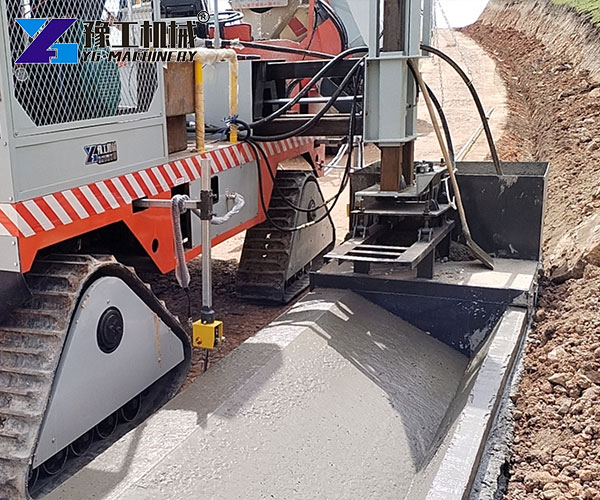
Cast-in-Place Curbing
- Time Efficiency
This method moves slowly because workers must install forms, pour concrete, and finish surfaces step by step. A team of six to eight workers usually completes 100–200 meters per day. Therefore, a one-kilometer project often takes seven to ten days.
- Cost Breakdown
The equipment investment is low because workers mainly use basic tools. However, labor costs stay high due to the large crew size. In addition, manual pouring often creates 10–15% material waste.
- Quality & Durability
The final quality depends heavily on worker skill. Uneven surfaces and cracks may appear over time. In most cases, these curbs last five to eight years before major repairs.
Precast Concrete Curb Blocks
- Time Efficiency
Since curing finishes in the factory, installation becomes faster. A team of four to six workers can complete 200–300 meters per day. However, transportation and alignment adjustment still slow the process.
- Cost Breakdown
Production, transportation and lifting equipment increase project costs. In addition, damaged blocks during transport may create extra losses.
- Quality & Durability
Factory production keeps curb sizes consistent. However, joints between blocks can crack or shift over time. With regular maintenance, precast curbs usually last eight to twelve years.
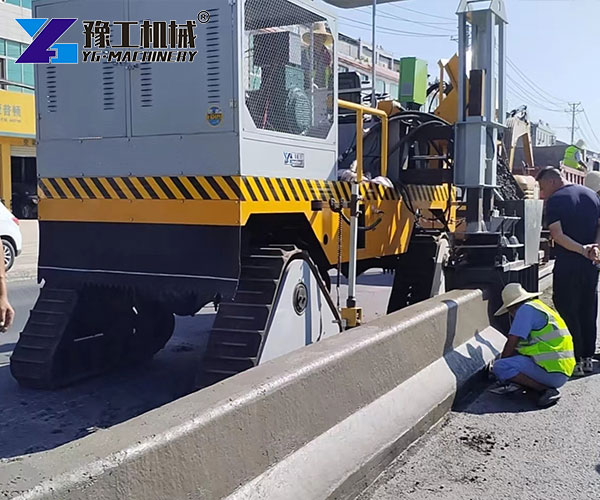
- Time Efficiency
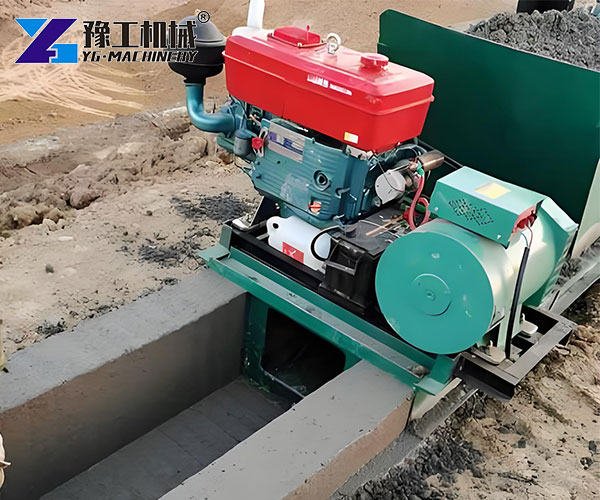
A slipform kerb machine can complete 500–800 meters per day with only one operator and several support workers. Under good conditions, output can reach 1200 meters daily.
- Cost Breakdown
Although the initial investment is higher, machine paving reduces labor costs by 40–60%. It also controls concrete usage better, keeping material waste below 5%.
- Quality & Durability
A slipform curb machine creates continuous curbs without visible joints. The finished surface looks smoother and more uniform. With proper maintenance, these curbs can last more than fifteen years.
Side-by-Side Comparison: Which Method Wins
| Comparison Item | Cast-in-Place Curbing | Precast Concrete Blocks | Construction with Slipform Curb Machine |
| 1km Construction Cycle | 7-10 working days | 4-6 working days | 1-2 working days |
| Average Cost Per Meter | 25-35 US Dollars | 30-40 US Dollars | 20-28 US Dollars |
| Labor Demand | A large number of workers are needed | Moderate worker quantity needed | Few workers needed |
| Concrete Waste Rate | 10%-15% | 5%-10% | Below 5% |
| Surface Smoothness | Ordinary and uneven | Uniform with joint gaps | Smooth and seamless |
| Overall Service Life | 5-8 years | 8-12 years | Over 15 years |
| Construction Adaptability | Only fit simple straight roads | Hard to match special road shapes | Fit straight, curved and sloped roads |
| Later Maintenance Frequency | High maintenance frequency | Medium maintenance frequency | Low maintenance frequency |
Why Choose YG’s Slipform Curb Machine
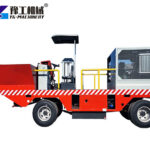
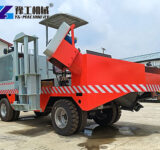
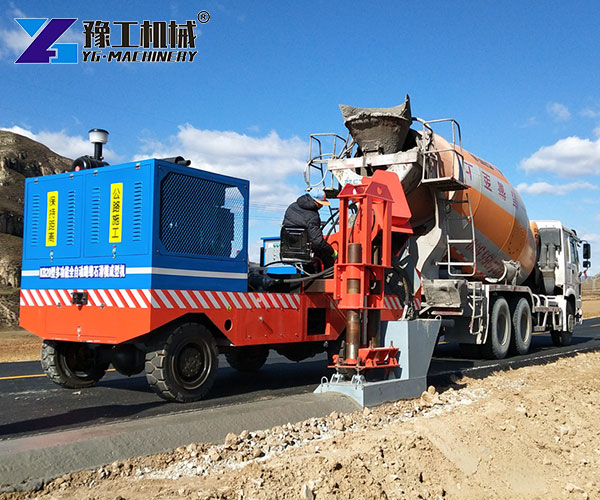
When upgrading to mechanized curb construction, YG’s concrete curb slipform machine stands as a trusted, high-performance solution engineered for tough job-site conditions. With over 20 years of manufacturing expertise, YG designs its slipform kerb machine to deliver reliable power, precise operation, and long-term durability, perfectly suited for municipal roads, highways, and large-scale infrastructure projects.
- Powerful & stable core performance
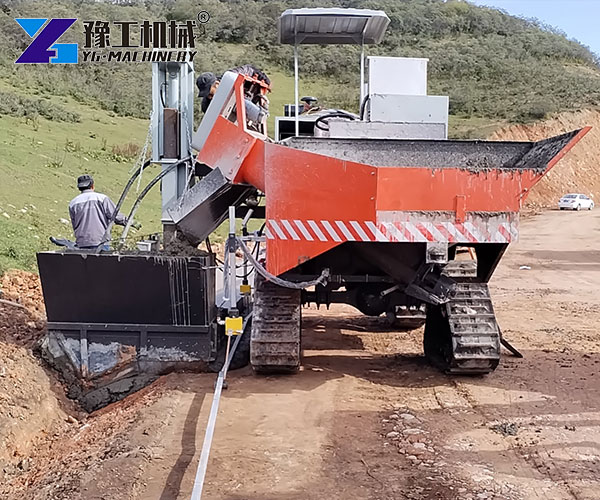
Equipped with a four-cylinder turbocharged diesel engine, YG’s slipform curb machine delivers consistent power in low-temperature, dusty, or high-load environments. A large torque hydraulic motor ensures steady concrete feeding and forming pressure, avoiding uneven surfaces during long working hours. Dual automatic steering enables smooth navigation on curves and intersections without stopping, while the anti-slip self-locking system secures the machine on slopes and uneven ground.
- Durable build with low maintenance costs
Key components feature wear-resistant spiral blades, minimizing abrasion from concrete and extending service life. A dual water-cooling and air-cooling system rapidly dissipates heat, stabilizing internal temperatures and reducing breakdown risks in hot weather. Users can select wheel-type frames for flat urban roads or crawler-type frames for muddy, rough terrain, adapting to diverse site conditions.
- Flexible customization for diverse projects
YG’s kerb laying machine supports custom curb molds to match various sizes, shapes, and drainage designs. High-frequency vibrators are optional to enhance concrete density and surface finish, reducing honeycombs and cracks. Remote control options simplify operation, cutting labor needs and boosting construction accuracy.
- high cost & efficiency savings
The concrete curb slipform machine reduces on-site labor to just 2–3 workers, eliminates repeated formwork setup, and limits concrete waste to under 5%. With daily output ranging from 500 to 1200 meters, projects finish much faster, and the finished curbs remain smooth, aligned, and durable for over 15 years.