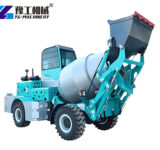
Concrete production becomes complicated when a project depends on too many machines and too many workers. A standard setup often includes a loader, a mixer, transport equipment, and several operators moving materials from one step to another. Small construction sites, mountain projects, road jobs, agricultural work, and remote building locations often struggle with this process. A self-loading mixer changes that workflow.
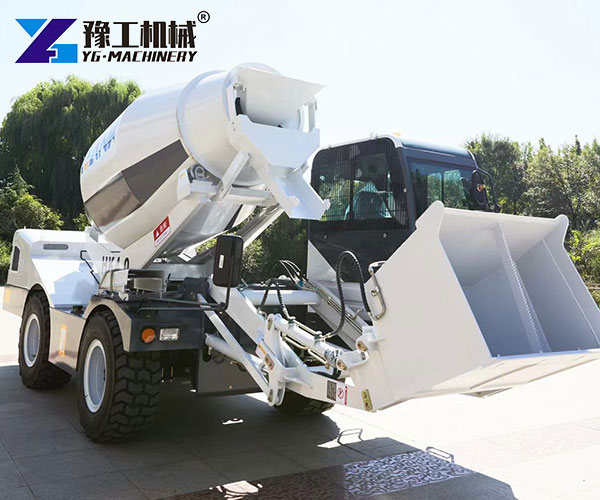
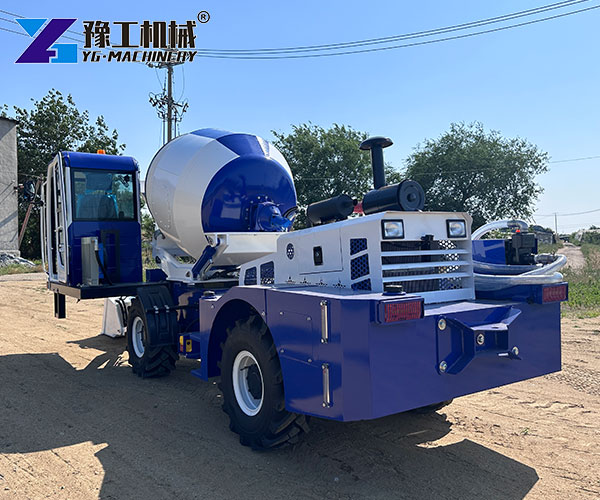
Parameters of Self-Loading Mixer
| Category | Specifications |
| Model | CMT1500 |
| Rated Power | 55kW |
| Engine Model | Quanchai 4B2-75m22 |
| Dimensions (L*W*H)(mm) | 6400*2550*2650 |
| Wheelbase | 2400mm |
| Vehicle Weight | 4185kg |
| Driving Form | Torque converter |
| Maximum Climbing Angle | 30° |
| Minimum Turning Radius | 4700mm |
| Minimum Ground Clearance | 280mm |
| Maximum Speed | 30km/h |
| Gearbox Model | ZL-265 gearbox |
| Gearbox Gears | 4 forward 4 back |
| Water Tank Volume | 400L |
| Water Supply Method | Time relay |
| Fuel Tank Capacity | 63L |
| Oil Capacity | 16L |
| Hydraulic Capacity | 63L |
| Reducer | KY07-2-0 |
| Pump | FC 50/40 |
| Motor | BM5-160 |
| Drum Capacity | 1700L |
| Drum Rotation Speed | 13 rpm |
| Concrete Yield | 1.5 m³/can |
| Mixing Drum Features | Double helical agitating screw and convex bottom |
Self-Loading Mixture System Components
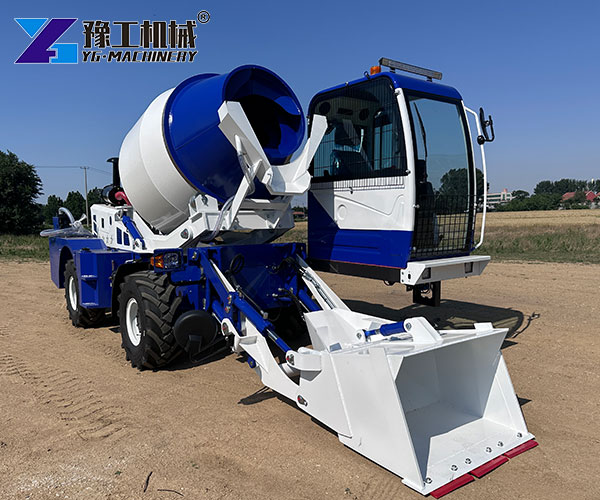
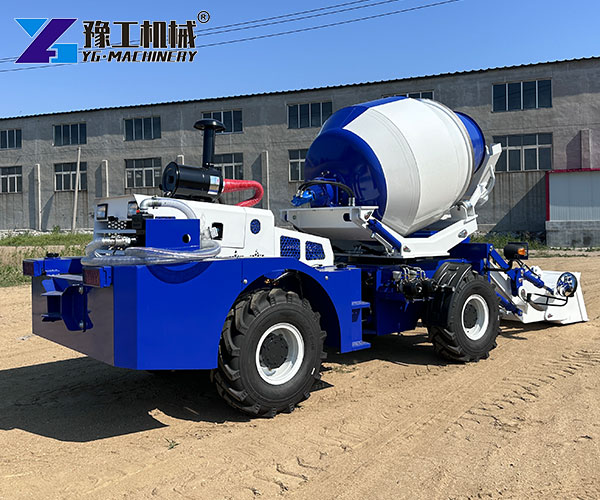
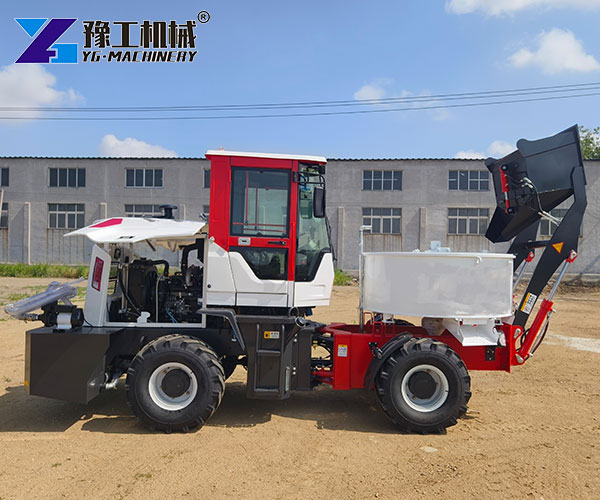
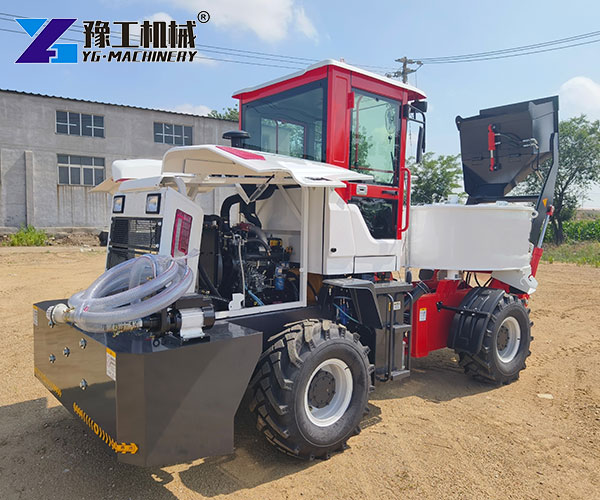
Loading Bucket
- sand
- gravel
- crushed stone
- cement
Mixing Drum
The 1700L drum performs mixing and transport functions. Double helical agitating screws keep concrete moving inside the drum during operation.
Water Supply System
The 400L water tank uses time relay water control. Operators can adjust water addition according to concrete ratio requirements.
Hydraulic System
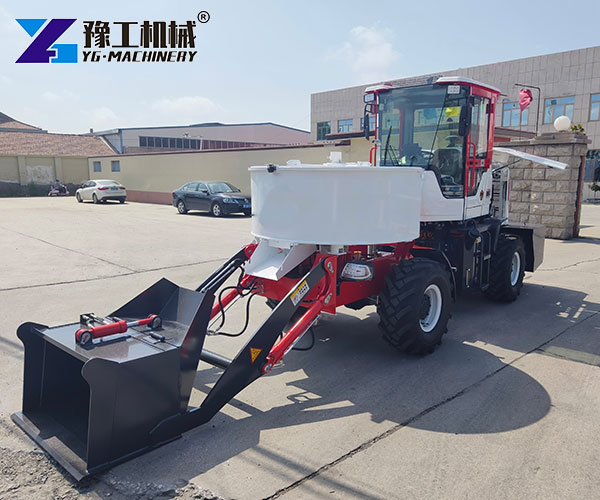
The hydraulic system controls:
- bucket movement
- drum rotation
- steering
- discharge functions
Drive System
4 forward and 4 reverse gears support maneuvering during loading, travel, and pouring operations.
Self-Loading Mixer vs Traditional Concrete Production
| Item | Traditional Method | Self-Loading Mixer |
|---|---|---|
| Equipment | Loader + Mixer + Transport Vehicle | One Machine |
| Crew Size | 4–8 Workers | 1 Operator |
| Mixing Area | Fixed Position | On Site |
| Concrete Transport | Additional Step | Integrated |
| Equipment Coordination | Multiple Machines | Single Unit |
| Labor Dependence | Higher | Lower |
Who usually buys self-loading mixers
- Contractors: Focus on scattered house foundations and small renovation jobs. They pick this machine to cut frequent ready-mix ordering costs and unstable onsite labor spending.
- Rental companies: Stock units to rent out to short-term project teams. Flexible daily rental income makes self-loading mixers a steady income asset for equipment leasing businesses.
- Road builders: Take charge of rural roadside paving and ditch repair across dispersed work zones. Poor local road access often blocks large ready-mix trucks, fitting the machine’s off-road travel ability.
- Agricultural construction firms: Build farm barns, field irrigation ditches, and livestock enclosure foundations. Works spread across wide farmland with no nearby centralized concrete batching plants.
- Infrastructure project teams: Handle remote minor public works like village drainage and small slope reinforcement. Limited on-site storage and transport conditions rule out traditional split mixing equipment.
Cost Structure Analysis for Contractors
- Save labor cost: A single self-loading mixer replaces an entire concrete crew, eliminating excess on-site manpower expenses.
- Cut equipment cost: The all-in-one self-loading mixer removes the need for renting and maintaining multiple separate construction machines.
- Reduce material waste: On-demand mixing avoids ready-mix concrete’s minimum orders and leftover material loss on site.
- Lower operating cost: Integrated single-machine operation centralizes fuel usage and simplifies daily budget management.
Customer Case: From Inquiry to Daily Use
Miguel, a Peru-based contractor, runs regional road repair and small construction jobs. His old setup depended on rented mixers and loaders, shifting equipment and staffing often delayed foundation and paving tasks.
His inquiry covered concrete yield, off-road mobility, maintenance convenience, and spare parts availability. After model comparison, he ordered one CMT1500 self-loading mixer. YG shipped the unit alongside operation training and wearable part suggestions.
Three months post-delivery, his real feedback: onsite concrete manpower shrinks sharply. The machine switches freely between pavement and building sites with no extra loading gear needed.
“We no longer deploy three separate machines for small concrete jobs; one operator finishes work once done by multiple workers.”
Why Choose YG
YG has focused on engineering machinery manufacturing for more than 20 years.
The company provides:
- pre-sales technical consultation
- model selection support
- customized equipment solutions
- after-sales service assistance
YG equipment holds CE and ISO certification.
Besides self-loading mixer equipment, YG also supplies: