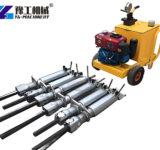
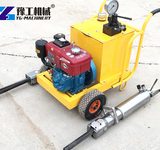
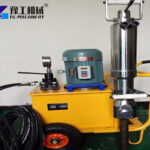
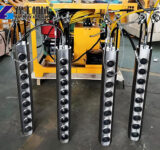
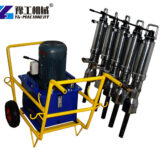
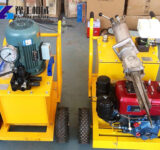
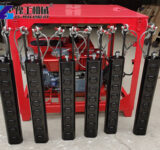
When buyers search for a piston rock splitter, they are usually looking for more than a rock-breaking machine. They want a solution for projects where blasting is restricted, vibration must be minimised, or large stone blocks need to be recovered without excessive damage.
Designed for quarrying, mining, tunnelling, and demolition work, a piston rock splitter uses hydraulic expansion force to create controlled fractures inside rock and concrete. The result is a cleaner splitting process that supports both productivity and material recovery.

What is a Piston Rock Splitter
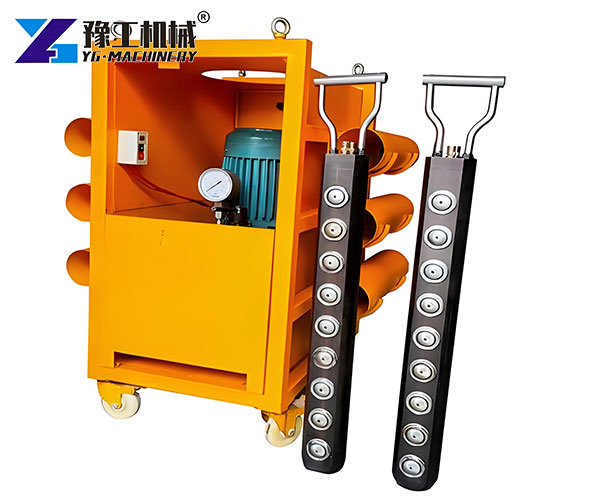
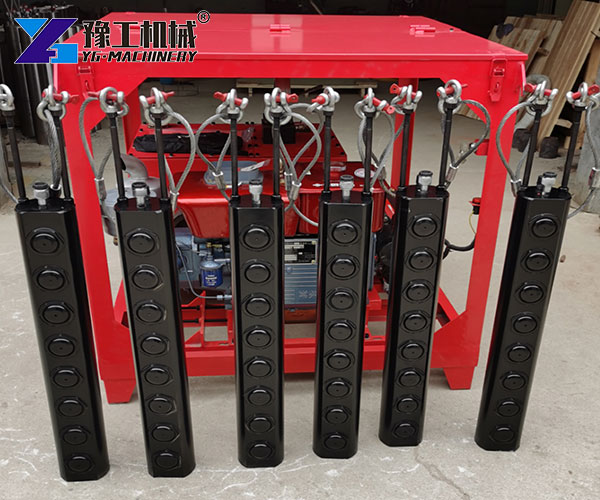
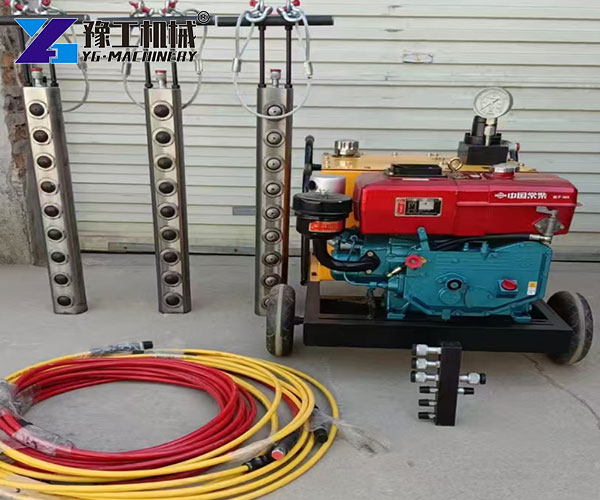
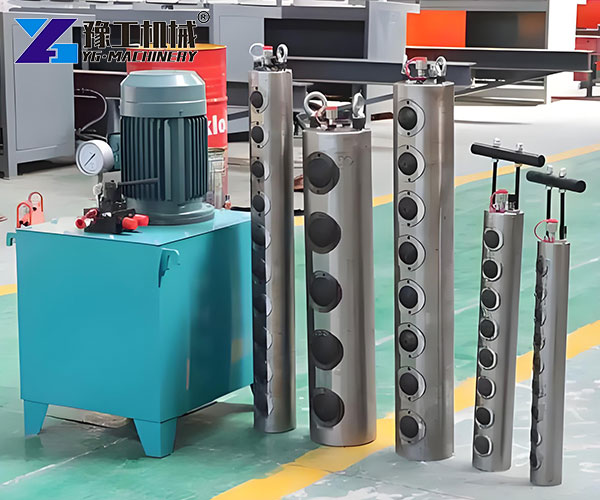
A piston rock splitter is a hydraulic-powered tool designed to split hard materials. It uses static pressure instead of explosive force. This makes it suitable for areas where blasting is not allowed. The device drives a wedge into pre-drilled holes, creating controlled cracks.
The same principle applies to the hydraulic piston rock splitter, which uses pressurised fluid to power the piston. Unlike impact hammers, it creates minimal vibration and noise. This makes it ideal for urban sites and environmentally sensitive areas.
Parameters of Piston Rock Splitter Technical
| Item | Specification |
| Model | YG-110 |
| Length | 900 mm |
| Punch Depth | >1000 mm |
| Punch Diameter | 100 mm |
| Crack Width | 10–20 mm |
| Splitting Time | 10–15 s |
| Splitting Force | Depends on Hydraulic System Configuration |
| Weight | 39 kg |
| Recommended Quantity per Set | 4 Pcs |
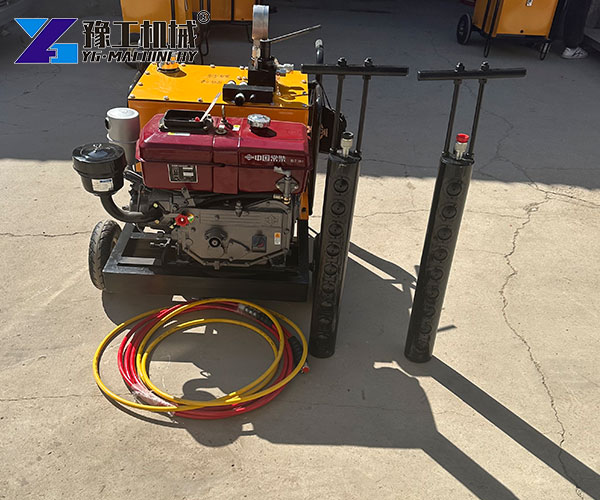
| Power Unit | 8 HP Diesel Hydraulic Pump |
| Hydraulic Hose Length | 40 m |
| Maximum Working Distance | 10 m |
4 Advantages of the piston rock splitter
- Controlled breaking: It creates precise cracks without over-splitting or damage to surrounding structures.
- Low noise operation: The static working mode avoids loud impacts, so work can continue near residential areas.
- Easy to move: At 39kg, one worker can carry and position the unit without extra lifting equipment.
- Flexible setup: The 40M oil tube allows the pump to stay at a safe distance from the splitting area.
High-Quality Materials Used in Hydraulic Piston Rock Splitter
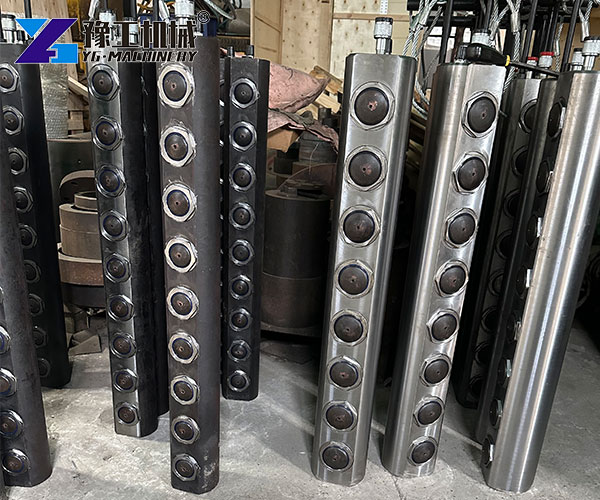
- Wedge and piston parts: Made of high-grade quenched alloy steel to resist wear under repeated use.
- Hydraulic seals: Industrial-grade materials prevent leaks even after long hours of continuous operation.
- Oil tubes: Reinforced rubber to withstand high pressure and movement across rough terrain.
- Outer shell: Thick steel plating protects internal parts from impacts and debris.

Application Scenarios for piston splitter

- Quarry operations: Split large rock blocks into manageable sizes for transport.
- Tunnel excavation: Remove hard rock barriers without damaging tunnel supports.
- Urban demolition: Break concrete foundations and thick walls near buildings.
- Road construction: Clear rock obstacles during expansion or repair work.
- Mining sites: Process rock masses in areas where blasting is restricted.
Efficiency & Production Improvements
Switching to a piston rock splitter brings visible changes to daily work output. A single worker can operate the unit, so you don’t need large teams for breaking tasks. The 10~15 second cycle time means each split is fast and repeatable.
Teams using this tool often see:
- Faster progress on hard rock sections
- Less time spent on manual breaking
- Lower risk of work delays due to noise or safety complaints
- Easier scheduling for projects near residential zones
Factors That Affect Piston Rock Splitter Cost
- Material grade: Higher-grade steel for wedges and pistons costs more but lasts longer.
- Hydraulic system quality: More reliable pumps and seals raise the upfront price but reduce maintenance.
- Customisation needs: Special punch sizes or extended oil tubes add to the total cost.
- Quantity of splitting rods: More rods mean more splitting points and a higher initial investment.

Customer Case & Feedback
A quarry contractor from Norway contacted YG Machinery for granite splitting optimisation.
Inquiry: Consulted about splitting depth, working productivity, delivery time and equipment compatibility for hard granite quarry projects.
Purchase: Confirmed the customised project solution and ordered four YG-110 splitters, one 8HP diesel hydraulic station and full sets of spare accessories.
Delivery: Finished strict factory testing and professional packaging; all equipment was delivered to the site on schedule.
Usage Feedback:
Granite block recovery increased by 23% after replacing traditional blasting methods.
On-site labor requirements decreased by 17% for daily quarry operation.
Surrounding noise complaints dropped significantly after switching to static splitting work.

Overall equipment utilization rate remains stably above 92%.

FAQ
Q: Can the machine replace blasting?
A: In many quarry, mining, and demolition applications, yes. It provides a controlled, non-explosive alternative.
Q: Is the equipment suitable for granite?
A: Yes. Granite is one of the most common materials processed using piston splitting technology.
Q: Can a hydraulic concrete splitter handle reinforced concrete?
A: Yes. It can break reinforced concrete structures while minimising vibration.
Q: What power source is available?
A: Both electric and diesel hydraulic stations are available, depending on project conditions.
Q: How deep can the splitter work?
A: The YG-110 model supports splitting depths greater than 1000 mm.

About YG Company
We have over 20 years of experience manufacturing construction machinery, and all our splitting equipment holds valid CE certification.
We develop and produce static splitting and quarry processing machines, serving clients worldwide with quality products and practical solutions.
- Professional pre-sales consultation for project matching
- Custom design for special working conditions
- Complete after-sales service and spare parts support
Our product range includes rock splitter hydraulic, and mobile crushing stations.