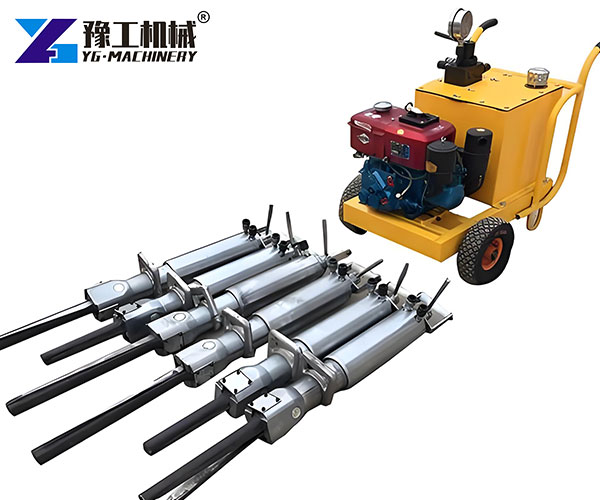
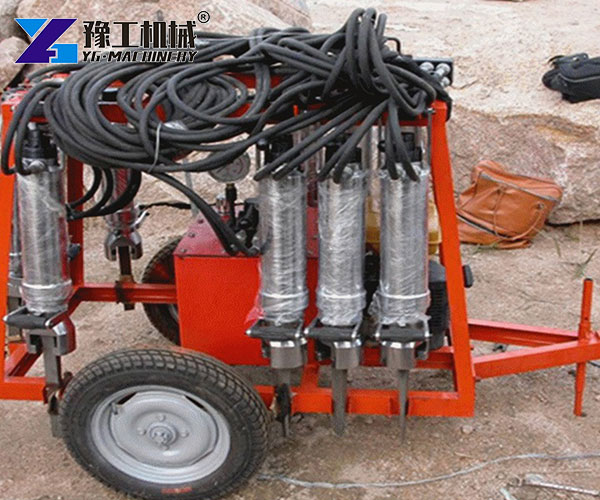
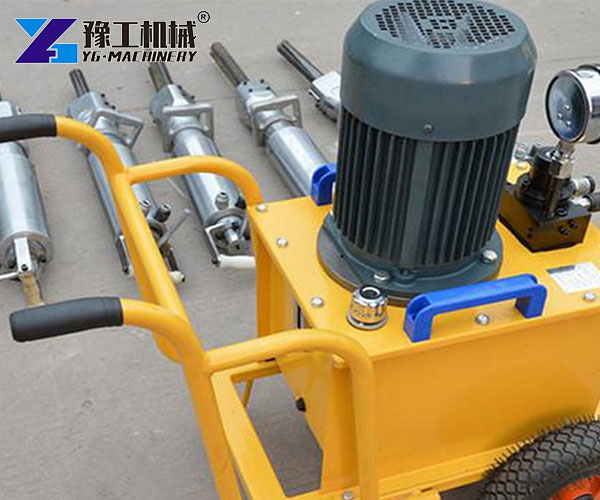
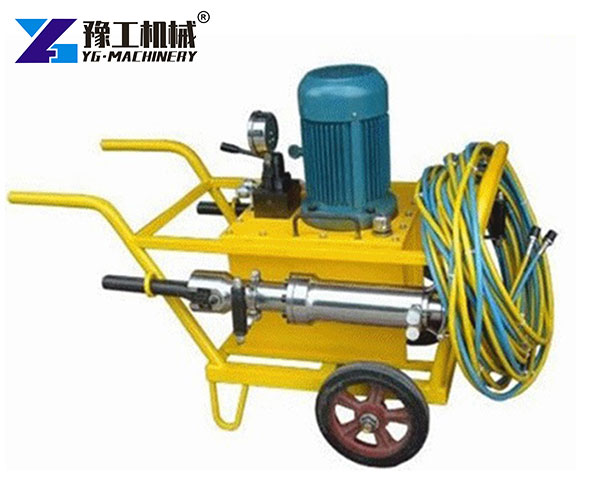
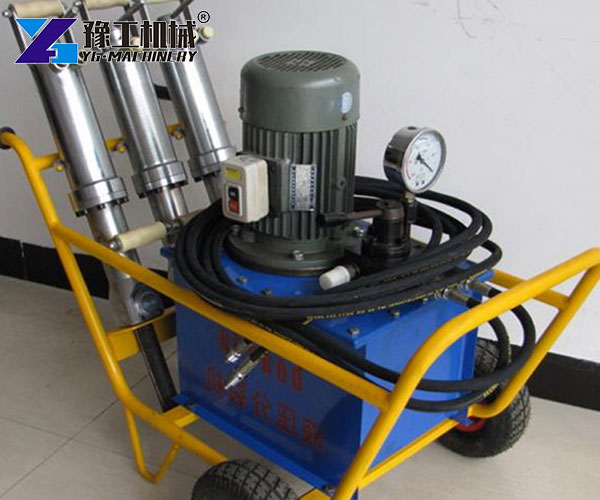
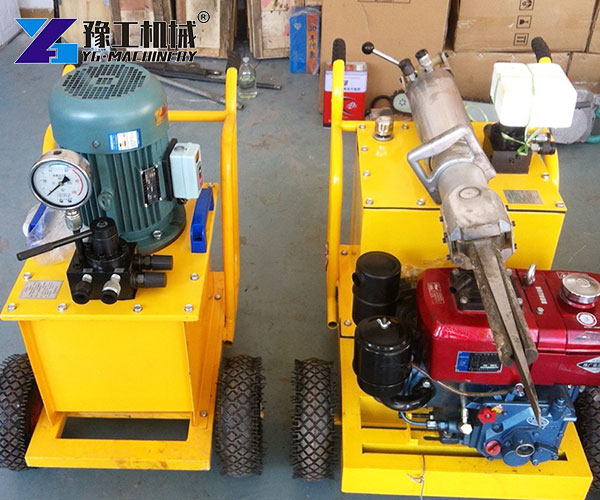
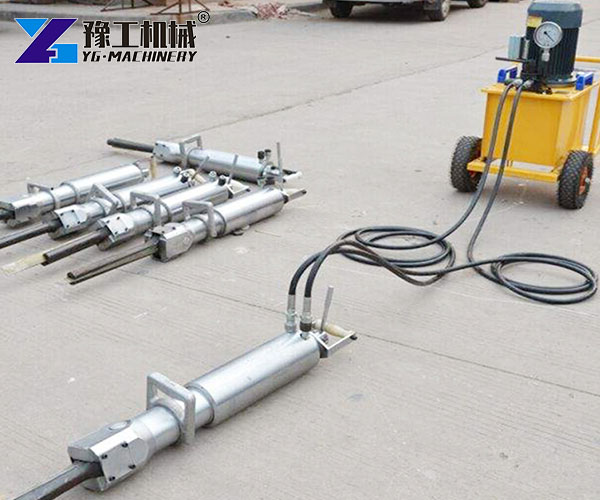
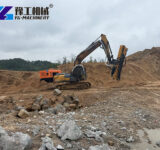
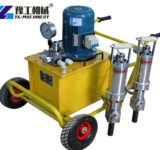
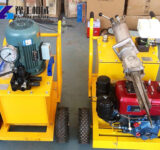
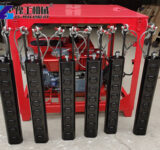
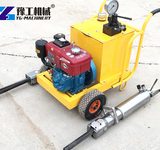
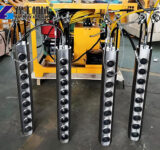
A hydraulic splitter for rock serves to split and break hard rock on construction sites. It handles solid rock masses that traditional manual tools struggle to process. Many project teams also match it with a hydraulic concrete splitter to finish mixed demolition work across different job sites. This tool fits regular rock processing tasks and keeps work progress steady all year round.

Parameters of the Rock Splitter Hydraulic
| Model | YG-250 | YG-350 | YG-450 |
| Power | Diesel Power Pack | ||
| Diesel Power Pack | Changchai 6hp or 8hp | ||
| Hydraulic Power Unit | Pressure Adjustable 10-60Mpa | ||
| Splitter Length(mm) | 1000 | 1100 | 1200 |
| Wedge Length(mm) | 250 | 350 | 450 |
| Wedge Weight(kg) | 30 | 36 | 43 |
| Piston Stroke(mm) | 90/220 | ||
| Drilling Depth(mm) | >500 | >700 | >900 |
| Drilling Diameter(mm) | 42 | 50 | 55 |
| Crack Width(mm) | 10-20 | ||
| Splitting Time(s) | 10-15 | ||
| Splitting Force(T) | 800 | 900 | 1000 |
How a Hydraulic Splitter for Rock Works
A hydraulic splitter for rock operates using static hydraulic pressure.
The process involves:
- Drilling holes into rock or concrete.
- Inserting the splitting cylinder.
- Connecting the hydraulic power station.
- Activating the hydraulic system.
- Expanding internal wedges through pressure.
- Creating cracks along natural fracture lines.

Unlike blasting methods, the splitting force originates inside the material. This allows operators to control crack direction more accurately.
The result is:

- Lower vibration
- Reduced noise
- Better safety
- Less damage to surrounding structures
This makes hydraulic splitting particularly valuable in areas where blasting is restricted.
Structural Details of Hydraulic Stone Splitter
- Wedge components: Made of high-hardness alloy steel, treated with quenching to resist wear under continuous pressure
- Hydraulic pipelines: Thickened explosion-proof tubes, which resist distortion when moving around busy sites
- Operating handle: Ergonomic design for long-time holding and operation
- Outer protective shell: A thick steel plate to avoid damage from collision and falling debris
Hydraulic Concrete Splitter Applications in Demolition Projects
- Quarry sites: Split raw stone for collection and transportation
- Mining areas: Remove rock barriers during mine expansion
- Tunnel projects: Clear rock masses inside tunnels for forward construction
- Urban demolition: Break hard rock and partial concrete in renovation works

Price Hydraulic Rock Splitter and Cost Efficiency
Many buyers focus on the hydraulic rock splitter price during the purchasing process.
However, equipment value extends beyond the initial investment.
Hydraulic splitting can reduce:
- Explosive material costs
- Blasting permit expenses
- Labor requirements
- Site protection costs
- Equipment wear associated with impact breaking
Because the splitting process is controlled, operators often achieve higher material recovery rates and fewer project delays.
Return on Investment of a Hydraulic Splitter for Rock
- Lower Operating Costs: Hydraulic systems require relatively simple routine maintenance.
- Reduced Labour Requirements: One operator can often manage multiple splitting cylinders.
- Expanded Project Opportunities: Hydraulic splitting allows contractors to bid on projects where blasting is prohibited.
- Improved Material Recovery: Controlled splitting produces cleaner fractures and minimises waste.
How to Choose the Right Hydraulic Splitter for Rock
Selecting the right equipment depends on project requirements.
Material Hardness
Granite requires different configurations than limestone or concrete.
Production Targets
Higher output generally requires:
- More splitting cylinders
- Larger hydraulic stations
- Greater splitting force

Project Environment
Urban demolition projects prioritise low vibration.
Mining operations often prioritise production capacity.
Future Expansion
Many customers begin with a smaller system and add additional cylinders as production increases.
Customer Case & Feedback
A construction team from Ecuador got in touch with us nine months ago for quarry rock processing.
- Inquiry: Asked about the rock splitter hydraulic performance, applicable rock types and the latest hydraulic rock splitter price
- Purchase: Confirmed all parameters and project matching conditions, then ordered three sets of hydraulic splitters for rock
- Delivery: Completed packaging and sea shipment within 6 working days, goods arrived at the port safely
- Usage Feedback:• Daily rock processing output increased by 48% after formal use• On-site labour reduced from 6 people to 2 people• Zero mechanical faults occurred during three months of continuous operation• Quiet working mode keeps the whole quarry in good order

FAQ
Q1: Can a hydraulic splitter for rock work in rainy and damp sites?
A1: The main body has basic waterproof treatment. It works normally in light rain. Cover the hydraulic pump when heavy rain comes.
Q2: Is it hard to replace worn wedges on a hydraulic stone splitter?
A2: Replacement steps are simple. Workers can finish the work with common hand tools in a short time.
Q3: What is the main difference between a hydraulic splitter for rock and a hydraulic concrete splitter?
A3: The internal pressure structure differs. Rock-dedicated models bear higher load, while concrete-oriented types focus on lightweight and flexible operation.
Q4: Will different accessories greatly affect the hydraulic rock splitter price?
A4: Basic supporting parts cause small price changes. Large-scale customised accessories will adjust the final quotation.

About YG Company
YG have more than 20 years of professional machinery manufacturing experience and holds valid CE certification for all products. Our team knows well about splitting equipment and on-site construction demands.
- Provide detailed pre-sales consultation to match the proper models for different projects
- Support personalised customisation for special working conditions
- Offer full after-sales support and spare parts supply on time

Our main product range covers: