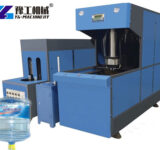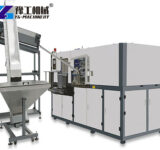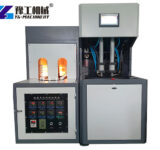
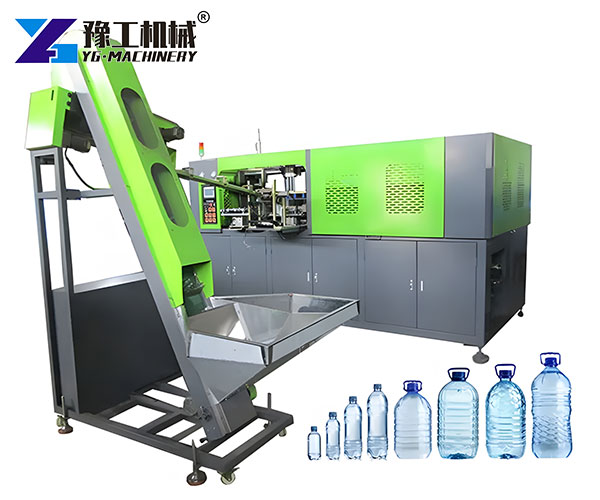
A professional bottle blow molding machine solves all these production and investment puzzles. Many factories waste money on mismatched equipment or suffer insufficient output due to incorrect model selection. As an experienced packaging machinery manufacturer, YG sorts out a complete selection and investment solution for a blowing machine for plastic bottles, helping buyers make cost-effective and long-term purchasing decisions.
Semi-Auto and Full-Auto Bottle Blower Selection
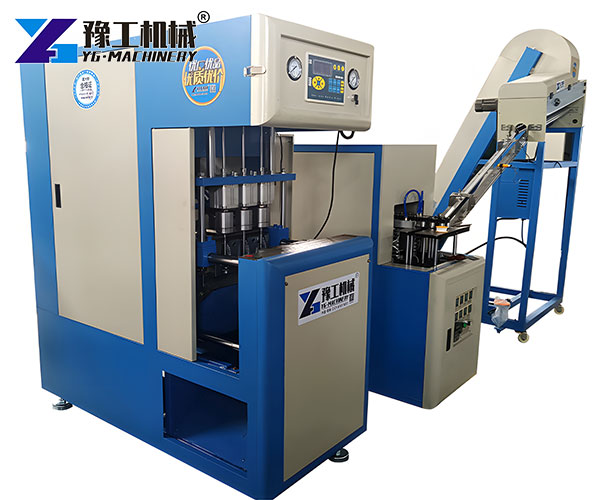
- Semi-auto: Fits newly founded factories with shifting orders. This bottle blower needs manual preform loading and allows frequent bottle design swaps to control initial spending.
- Full-auto: Suits mature plants with steady bulk orders. This bottle blowing machine finishes feeding and forming automatically, and cuts long-term labor expenses.
Cavity Configuration and Daily Production Capacity
Target output directly decides cavity options of the bottle molding machine, with many users aiming for around 50,000 bottles daily.
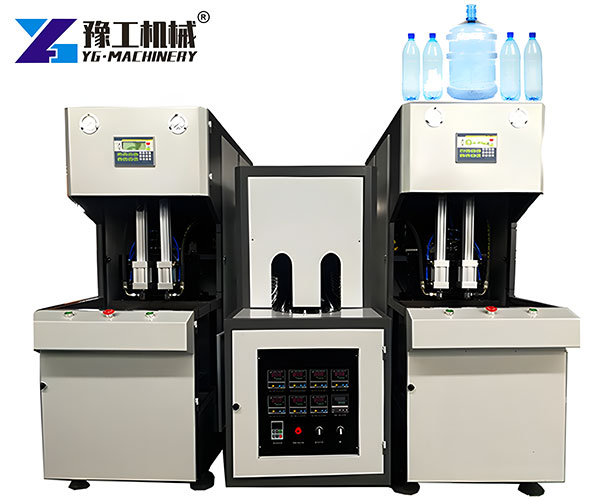
- 2-cavity semi-auto: 1200–2000 bottles/h, under 30,000 daily yield
- 4-cavity semi-auto: 2000–3200 bottles/h, hits 30,000–50,000 daily targets
- 6/8-cavity full-auto: 4000–8000 bottles/h, over 50,000 daily output
YG tailors every plastic bottle moulding machine according to the real order volume to avoid insufficient capacity or unnecessary overspending.
Complete Bottle Blow Molding Production Line Composition
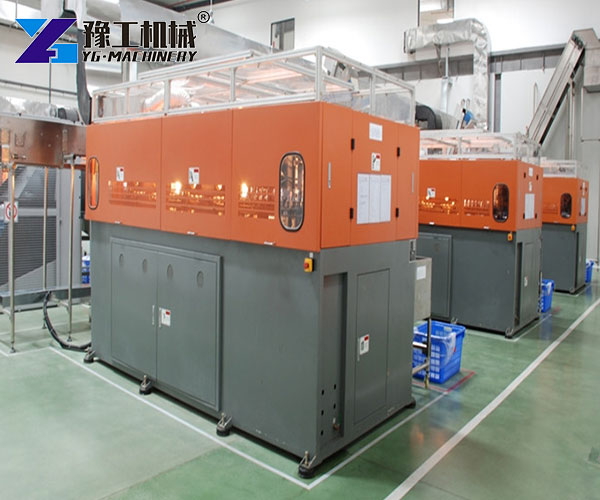
New buyers commonly only purchase main hosts and overlook auxiliary parts, triggering unstable production. A full bottle blow molding setup includes grouped devices.
- Must-have accessories: heating oven, air compressor, industrial chiller
- Optional upgrades: automatic preform feeder, finished bottle conveyor
YG offers a matched one-stop configuration to keep the whole line running smoothly from startup.
Bottle Blowing Machine Price and Practical Budget Analysis
Bottle blowing machine price shifts with automation, cavity quantity, and custom molds. Semi-auto options carry a lower entry cost with easy daily maintenance. Full-auto units cost more upfront yet save continuous workforce costs year by year. Custom-shaped bottle molds bring moderate price changes. YG lists every expense on formal quotes with zero hidden fees to simplify buyers’ budget planning.
Long-Term Capacity Expansion and Upgrade Space
Growing order volume makes future expansion a top concern for investors. All YG machines adopt a modular build.
- Semi-auto units upgrade via higher-cavity molds without replacing the main equipment
- Full-auto devices expand production by adjusting parameters and adding auxiliary machines
This flexible design helps factories expand gradually without large repeated investment.
Outsourced Bottles VS In-House Production
| Comparison Item | Outsourced Bottle Purchase | In-House Bottle Blow Molding Production |
|---|---|---|
| Unit Cost | Supplier profit plus cross-region delivery | Preform and electricity only |
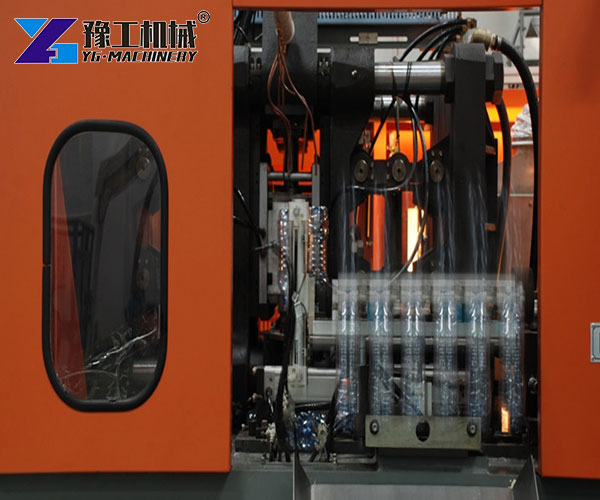
| Quality | Uneven thickness across batches | Stable specs via fixed machine settings |
| Delivery | Restricted by supplier schedules | Produce required stock on demand |
| Customization | Slow revision for new packaging | Quick mold replacement for new styles |
Recommended YG Solutions by Production Capacity
Startup Projects
For businesses producing up to 20,000 bottles per day, a 2-cavity system often provides a practical entry point.
Growing Water Plants
Factories producing 20,000–50,000 bottles daily frequently choose a 4-cavity bottle blow molding machine because it balances output and investment.
Commercial Beverage Production
A 6-cavity solution is commonly selected by manufacturers preparing for larger production volumes.
Large Packaging Operations
For factories supplying multiple brands or operating continuously, an 8-cavity configuration can support substantial production targets.