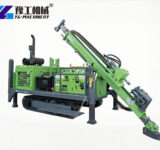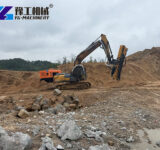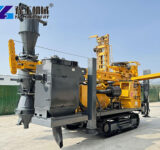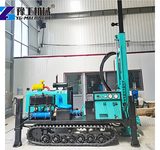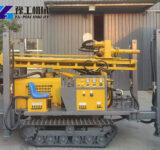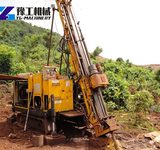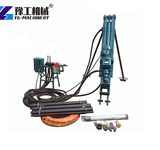
Many contractors struggle when starting groundwater projects. Hard rock slows drilling speed, unstable soil increases collapse risk, and traditional rigs lose efficiency in deep holes. A hydraulic well drilling rig solves these issues by keeping torque stable and reducing pressure loss during drilling. It supports continuous operation in different soil layers and helps contractors complete wells in shorter cycles.
In real field work, a hydraulic well drilling rig becomes the core equipment for projects where speed and stability directly affect profit.

Technical Specs For Hydraulic Well Drilling Rig
| Model | YG-180 | YG–200 | YG–300 | YG–300A | YG–400 | YG–600 |
| Drilling hole diameter | 140-254mm | 140-305mm | 140-325mm | 140-325mm | 140-350mm | 140-350mm |
| Drilling depth | 180m | 200m | 300m | 300m | 400m | 600m |
| One-time advance length | 3.4m | 3.4m | 6.6m | 3.4m | 6.6m | 6.6m |
| Walking speed | 2.5km/h | 2.5km/h | 2.5km/h | 2.5km/h | 2.5km/h | 2.5km/h |
| Climbing angles (Max.) | 30 | 30 | 30 | 30 | 30 | 30 |
| Equipped capacitor | 55kw | 65-70kw | 84kw | 75.8kw | 92kw | 115kw |
| Using air pressure | 1.7-2.5mpa | 1.7-3.0mpa | 1.7-3.3mpa | 1.7-3.0mpa | 1.7-3.5mpa | 1.7-3.5mpa |
| Air consumption | 17-31m³/min | 17-30m³/min | 17-35m³/min | 17-35m³/min | 17-35m³/min | 17-35m³/min |
| Drill pipe length | 1.5m, 2.0m, 3.0m | 1.5m, 2.0m, 3.0m | 1.5m, 2.0m, 3.0m,6.0m | 1.5m, 2.0m, 3.0m | 1.5m, 2.0m, 3.0m,6.0m | 1.5m, 2.0m, 3.0m,6.0m |
| Drill pipe diameter | 76mm, 89mm | 76mm, 89mm | 89mm, 102mm | 76mm, 89mm, 102mm | 89mm,102mm,108mm | 102mm,108mm,114mm |
| Rig lifting force | 15t | 12t | 20t | 16t | 22t | 28t |
| Swing speed | 45-65rpm | 45-70rpm | 45–115rpm | 40–70 rpm | 45-115rpm | 45–115rpm |
| Swing torque | 3200-4600(N.m) | 3500-4800(N.m) | 6200-8500(N.m) | 5700-7500(N.m) | 6500-9000(N.m) | 8500-11000(N.m) |
| Dimension | 3800*1500*2200mm | 4000*1750*2450mm | 5900*2000*2850mm | 4100*1950*2600mm | 5900*2100*2850mm | 6000*2200*2850mm |
| Weight | 4500kg | 5800kg | 9000kg | 7000kg | 10000kg | 12000kg |

Working Principle of Hydraulic Well Drilling Rig
The hydraulic well drilling rig works through a closed hydraulic system that transfers engine power into rotary force.
Hydraulic pumps generate pressure, and then the system converts it into high-torque rotation for drilling rods. This allows smoother penetration into mixed soil and rock layers.
In real applications, borehole drilling equipment combined with hydraulic control reduces vibration and keeps drill bits aligned with the borehole center.
When used with deep well drilling equipment, the system maintains stable output even in fractured rock formations.
Details Built For Long-Term Field Use
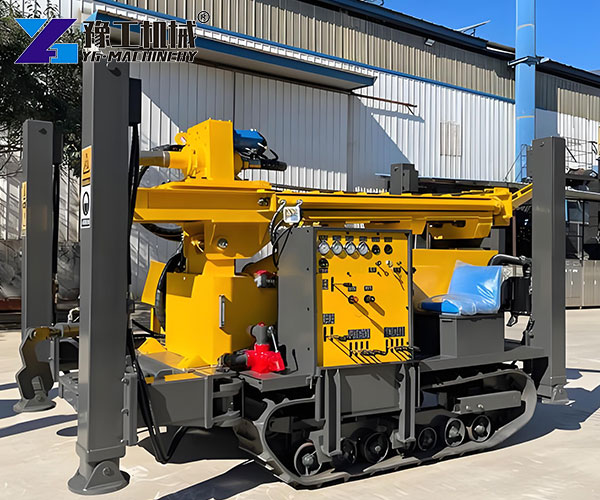
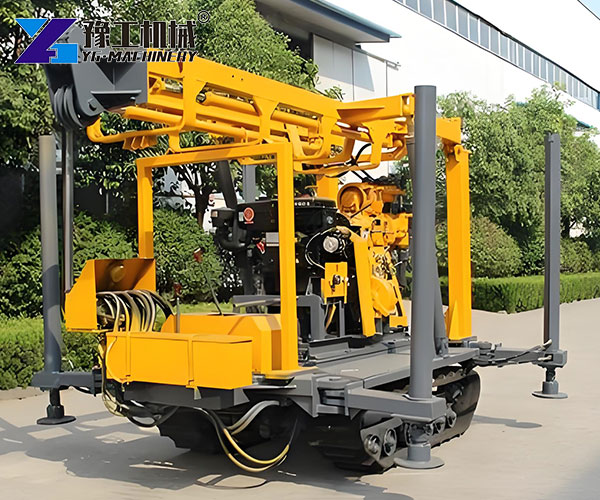
- Power head frame: Thick Q355 alloy steel plate, full weld treatment to resist impact during rock drilling
- Crawler tracks: High manganese wear-resistant steel plates, stable grip on muddy and sloped ground
- Hydraulic pipeline joints: Anti-leak sealing rings, reduce oil waste under long continuous shifts
- Central control panel: Dustproof protective cover, clear pressure readouts for real-time operation adjustment
Application Scenarios of Hydraulic Well Drilling Rig
- Agricultural irrigation wells
- Rural drinking water projects
- Mining water supply drilling
- Construction site water sourcing
- Geothermal exploration
Cost Efficiency Breakdown For Hydraulic Well Drilling Rig Investment
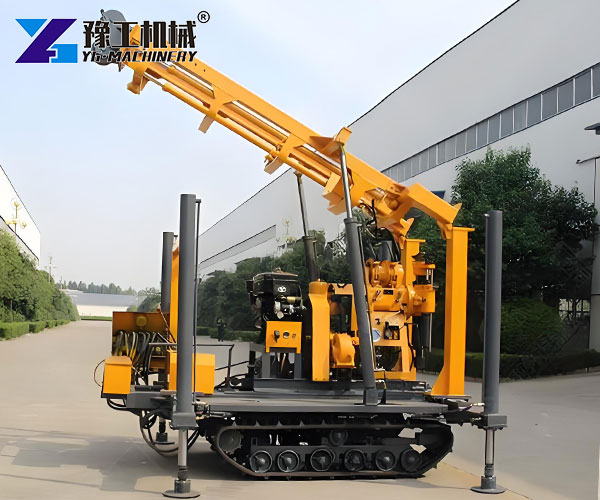
Initial procurement cost forms only a small share of total long-term operation spending for hydraulic well drilling rig owners.
Diesel fuel and worn drill part replacement take up the largest regular expense each month. YG optimizes hydraulic transmission structure to cut fuel consumption by nearly 17% compared to old mechanical rig designs.
Standardized wearing parts fit across the borehole drilling equipment series; contractors do not need to stock separate spare part inventories for different machine models. Crawler mobility removes rental fees for flatbed transport vehicles on rural roads, saving recurring transit costs month after month.
ROI Cycle Calculation For Hydraulic Well Drilling Rig Buyers
Field data collected from overseas water engineering contractors shows clear return cycles after purchasing a hydraulic well drilling rig.
A single rig completes an average of 4–6 standard 120m irrigation wells per workday. Each finished borehole generates stable project revenue after deducting fuel and drill bit costs.
For contractors running daily drilling services 26 days each month, full investment recovery usually falls within 10–14 months. Teams that add supporting water drilling trucks and deep well drilling equipment expand daily service capacity and shorten ROI cycles to 7–9 months.
Reference Points To Pick A Suitable Hydraulic Well Drilling Rig
Project geological conditions set the baseline for selecting hydraulic well drilling rig configurations. Hard granite layers require higher torque power head variants, while soft soil zones work with standard torque models.
Max required drilling depth decides whether to pair the rig with deep well drilling equipment for extended excavation capacity.
Working site distribution shapes mobility selection: fixed-site construction picks a crawler hydraulic well drilling rig; cross-region service teams add a water drilling truck for flexible transport.
Small budget contractors can match the main rig with a lightweight water borehole drilling machine to cover shallow and medium-depth tasks without buying two full heavy rigs.

Customer Case Study
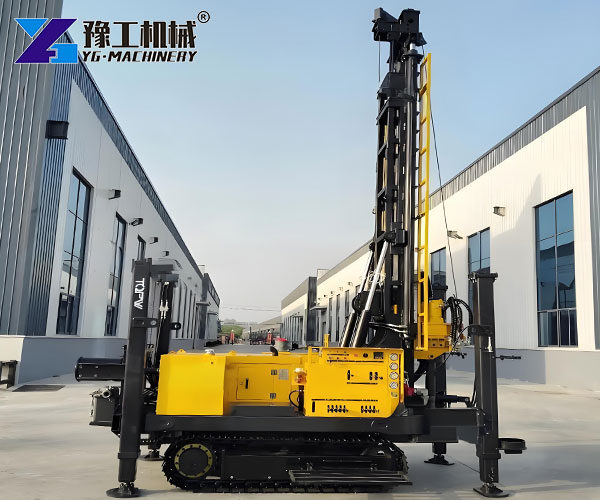
A mining contractor from South Africa sent an inquiry for a hydraulic well drilling rig for water supply drilling near a mining zone.
After evaluation, they selected a crawler-type system combined with borehole drilling equipment and deep well drilling equipment modules.
Delivery took 32 days. On-site results:
- Average drilling depth: 210m
- Daily output: 1.5–2 wells
- Fuel efficiency improved by 22% compared to the previous machine
After 60 days, the client reported stable operation in the granite layers. They later ordered another water drilling truck unit to expand operations across two additional sites.
FAQ
Q1: Can one hydraulic well drilling rig finish both shallow home wells and 300m deep municipal water boreholes?
A1: Standard hydraulic well drilling rig suits 30–300m medium-depth tasks. Projects over 300m need matched deep well drilling equipment to reach the target underground water layers. Shallow private wells can use a separate water borehole drilling machine to save operating costs.
Q2: Does the matched water drilling truck need special oversized road permits for mountain rural transit?
A2: YG water drilling truck uses a standard commercial vehicle chassis meeting international load limits; no extra special transit permits needed for most rural and municipal road networks.
Q3: What warranty protection comes with a hydraulic well drilling rig and supporting borehole drilling equipment?
A3: Core hydraulic assemblies and diesel engine carry a 12-month factory warranty. Consumables such as drill bits and sealing rings enjoy a 3-month free replacement policy.
Q4: Can YG adjust the torque and mast height of the hydraulic well drilling rig for unique geological project demands?
A4: Custom parameter modification is available for all rig models. Our engineering team adjusts power output and structural size based on client-submitted geological reports before production.
About YG Machinery
YG Machinery has 20+ years of drilling machinery manufacturing experience. All hydraulic well drilling rigs, borehole drilling equipment, deep well drilling equipment, water borehole drilling machines, and water drilling trucks have official CE certification.
We provide professional pre-sales consultation and custom solutions. Reliable after-sales support and global spare parts supply keep your projects running smoothly.
We also offer RC reverse circulation drilling rigs, photovoltaic pile drivers, and mobile crushing stations.