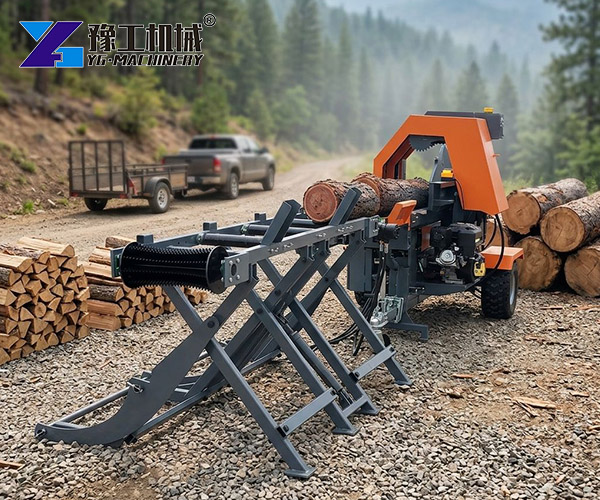
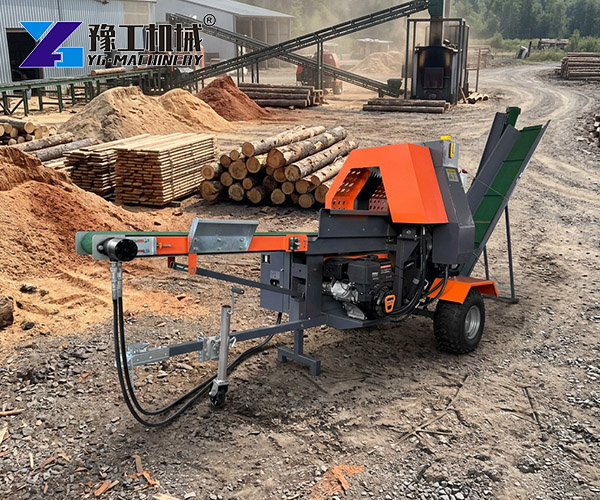
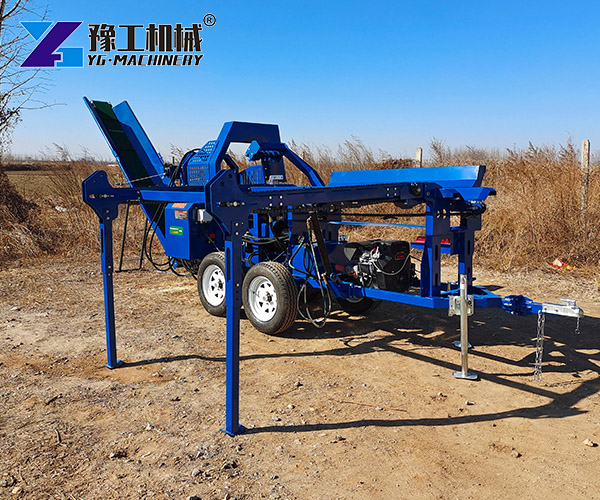
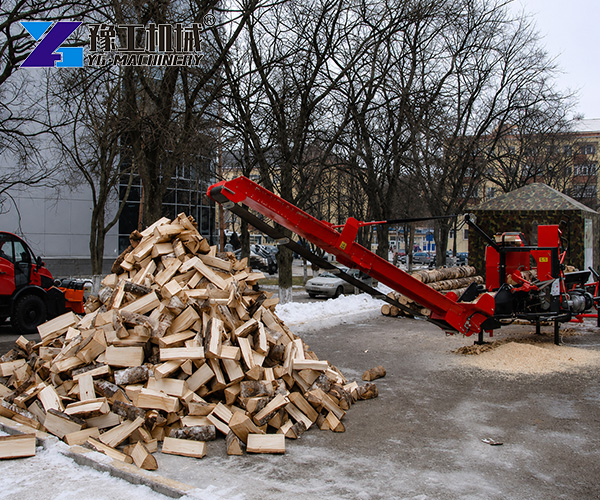
Choosing the right industrial wood splitter is an important decision for businesses that process firewood in large volumes. The machine needs to match the size of your logs, production target, and working environment. A suitable model can help maintain steady output and reduce unnecessary labor. Before comparing machines, it is important to understand which specifications matter most for your operation.
The first step is to define your actual processing requirements. Start with the logs rather than the machine.
Record the typical and maximum log diameter. Measure the log length you plan to process. Also consider the type of wood. Hardwood, softwood, fresh logs, and dry logs can behave differently during splitting.
Your daily workload is another important factor. A machine used for a few hours each week has different requirements from equipment running throughout the working day.A clear list of requirements makes machine selection more accurate. It also gives the manufacturer enough information to recommend a suitable configuration.
Splitting force determines how effectively a machine can open a log. The required force depends mainly on wood hardness, log diameter, knots, and grain structure.
Smaller softwood logs may require less force. Large hardwood logs can demand considerably more. If your material varies significantly, base your selection on the more demanding logs you regularly process.
Do not judge a machine by tonnage alone. The hydraulic cylinder, pump, wedge, and frame all affect actual performance.
A machine with suitable splitting force should handle your normal material without operating continuously at its maximum capacity. This can provide a more practical balance between performance and equipment investment.
Power source is mainly a question of operating conditions.
Electric equipment can be suitable for workshops, processing yards, and other locations with stable electricity. It can offer convenient operation without fuel storage.
Gas-powered models provide greater freedom in outdoor environments. They can be useful for farms, forestry operations, and locations where electrical power is limited.
Consider your available power supply, working location, operating hours, and maintenance resources. These factors can help determine which configuration fits your business.
The choice should also take local electrical standards and engine requirements into account when purchasing equipment for export.
The machine’s working orientation affects how logs are loaded and handled.
Horizontal operation is suitable when logs can be easily lifted onto the working beam. It can provide a straightforward workflow for standard-size firewood.
Vertical operation is useful when handling larger and heavier logs. The operator can position the log at a lower level instead of lifting it onto the machine.
Think about the physical effort required during loading. If your operation regularly handles heavy logs, reducing unnecessary lifting can improve the overall working process.
The available working space should also be considered. Make sure there is enough room around the machine for loading, splitting, and removing finished pieces.
Improve Efficiency With the Right Industrial Log Splitter
Once machine capacity is established, look at operating efficiency.
Cycle time is an important specification. It measures how long the machine takes to complete a splitting cycle. A shorter cycle can increase production when the equipment is used continuously.
However, cycle time should be considered together with the loading process. If operators spend more time positioning logs than running the machine, a faster hydraulic cycle may have limited impact on total output.
For larger operations, automatic or assisted log handling can make a significant difference. Conveyors, log tables, and other handling equipment can help create a smoother material flow.
The aim is not simply to make one splitting cycle faster. The goal is to improve the complete production process.
An industrial wood splitter can operate independently or become one part of a larger firewood production system.
For businesses that process substantial volumes, combining cutting, splitting, conveying, and stacking operations can reduce repeated manual handling.
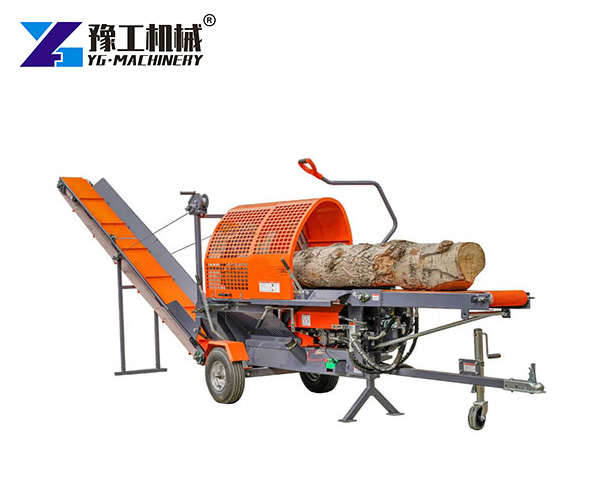
A Firewood Processor is designed for this type of workflow. It can combine multiple processing steps and create a more continuous production process.
When planning an integrated system, consider the capacity of every stage. Cutting equipment, splitting equipment, conveyors, and packaging or stacking systems should work at compatible rates.
If you already have a production line, provide its technical specifications before adding new equipment. This helps the manufacturer evaluate compatibility and avoid unnecessary modifications.
Machine durability depends heavily on its core components.
The hydraulic system should be designed for the required workload. Pay attention to the hydraulic pump, cylinder, control valve, hoses, and oil tank.
A Hydraulic wood splitter should also allow convenient inspection and maintenance. Easy access to key components can reduce service time.
The frame is equally important. A strong steel beam helps support the log during high-force operations. Good welding and reinforcement are especially important around high-load areas.
The splitting wedge should also be made from durable material. Its shape and construction influence how efficiently force is transferred into the log.
These details may not be obvious from a product photograph, so ask the manufacturer for technical specifications when comparing machines.
If your business needs more than basic splitting, a wood splitter machine may be worth considering.
The main advantage is workflow integration. Instead of moving logs between several independent machines, multiple operations can be connected into one system.
Before choosing a processor, determine your target output. Then consider the maximum log diameter, log length, cutting method, splitting capacity, and finished firewood size.
Space is another consideration. A complete processing system requires enough room for raw logs, machine operation, finished firewood, and operator access.
For export projects, also consider installation requirements and available technical support. A clear layout and detailed specifications can make installation easier at the customer’s site.
When searching for a commercial log splitter for sale, the purchase price should not be the only comparison point.
Consider the machine’s expected service life and operating requirements. A durable machine may offer better value even when its initial price is higher.
Look at:
Machine capacity
Hydraulic component quality
Energy or fuel consumption
Maintenance requirements
Replacement parts
Warranty coverage
Technical support
Shipping dimensions
The same approach applies when evaluating a commercial wood splitter for sale. Calculate the total cost of ownership rather than focusing only on the initial quotation.
For international buyers, packaging and transportation should also be included in the purchasing calculation.
Before placing an order, confirm the main technical and commercial details.
Maximum log diameter
Maximum log length
Wood types
Required splitting force
Target production volume
Cycle time
Power source
Horizontal or vertical operation
Hydraulic specifications
Machine dimensions
Spare parts
Warranty
Installation and technical support
A reliable Wood splitter machine should be selected according to the actual working conditions, not simply based on its advertised tonnage or price.
YG Machinery can work with buyers to evaluate log specifications, production requirements, and operating conditions. By providing these details in advance, customers can receive a machine configuration that is better suited to their application and long-term production goals.【WhatsApp/WeChat/Phone/Skype】+86 13937183602