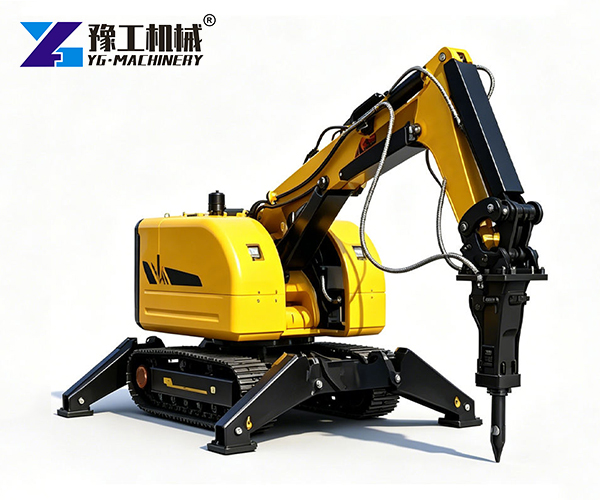
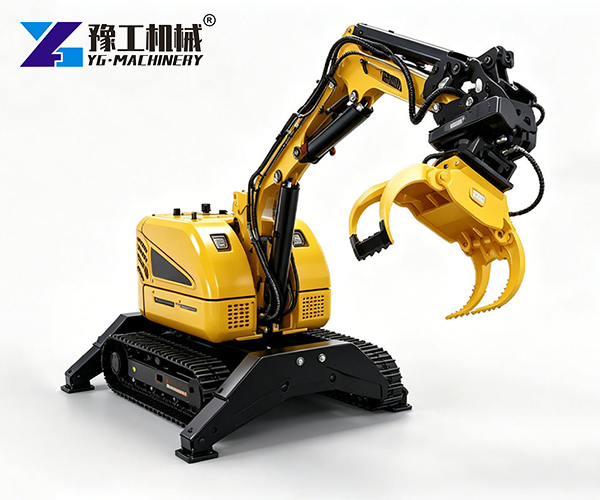
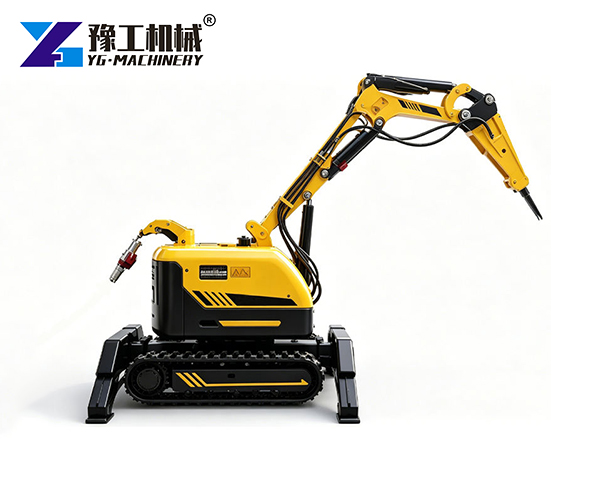
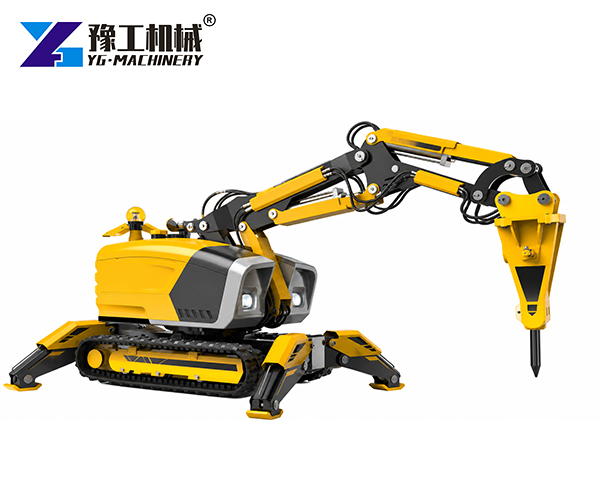
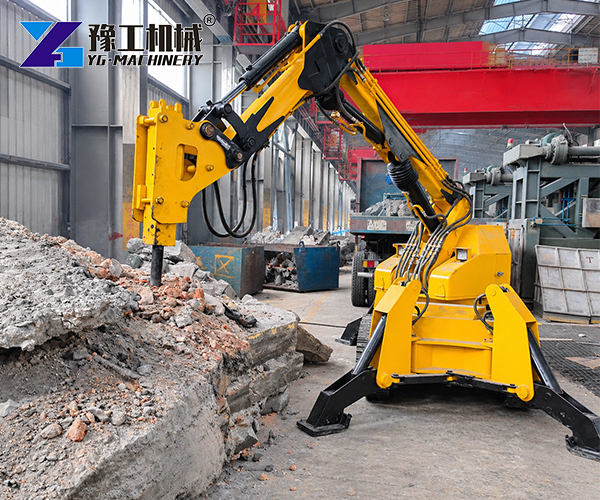
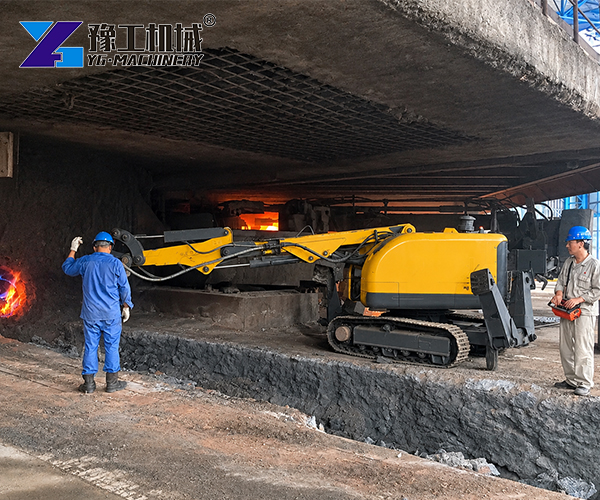
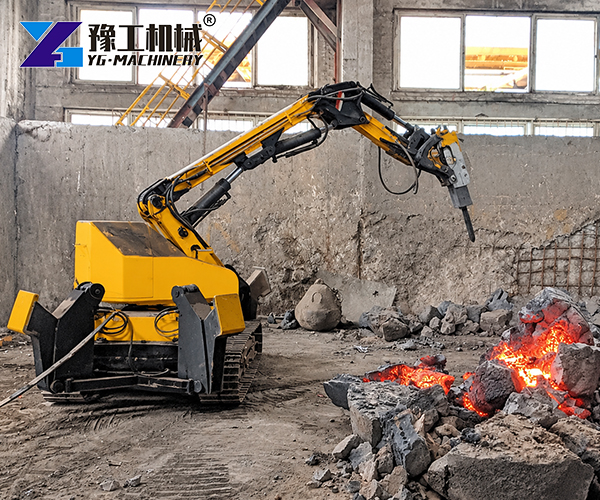
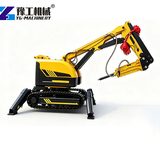
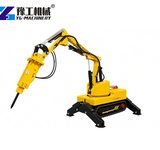
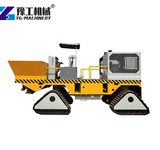
A demolition robot is a compact tracked machine designed for breaking concrete and removing structures in difficult working areas. It combines a hydraulic working arm, wireless control system, and interchangeable attachments. Its flexible design makes it suitable for indoor demolition, tunnel construction, and industrial maintenance.
YG Machinery offers multiple models with different machine sizes, power systems, and working capacities. Buyers can select electric or diesel versions according to their project requirements.
Technical Parameters
YG10D
YG10C
YG15D
YG15C
YG30D
YG50D
YG50C
YG80C
Machine Weight (kg)
1050
1096
1650
1750
3250
6000
6200
8210
Attachment Weight (kg)
120
120
250
250
420
600
600
750
Track Width (mm)
160
180
230
230
300
300
300
400
Travel Speed (km/h)
2.3/4.2
2.3/4.2
2.3/4.2
2.3/4.2
2.7
2.4/4.5
2.4/4.5
2.4/5.0
Rotation Speed (r/min)
10
10
8
8
6
6
6
6
Climbing Angle (°)
30
30
30
30
30
30
30
30
Drive Type (kW)
Electric (11)
Diesel (14.5)
Electric (18.5)
Diesel (18.5)
Electric (22)
Electric (37)
Diesel (74)
Diesel (85)
Hydraulic Flow (L/min)
0–40
0–40
0–70
0–66
0–100
0–130
0–130
0–170
Max. Pressure (MPa)
21
21
25
25
25
25
25
25
Working Pressure (MPa)
16
16
17
17
17
17
18.5
18.5
Wireless Control Range (m)
150
150
150
150
150
150
150
150
Max. Working Height (mm)
4210
4210
4650
4650
6200
6800
6800
7200
Max. Working Length (mm)
3750
3750
4215
4215
5800
6500
6500
8000
Max. Working Depth (mm)
1635
1635
1450
1450
2700
2600
2600
2360
Overall Length (mm)
2225
2225
2820
2820
3805
4660
4660
5160
Overall Width (mm)
730
780
990
990
1210
1640
1640
2255
Overall Height (mm)
1365
1365
1380
1380
1590
1890
1890
2571
Model Selection Notes:
D models use electric power, while C models use diesel power.
Smaller models suit projects with limited access space.
Larger models provide greater working reach for demanding demolition tasks.
Buyers should check attachment compatibility and site conditions before ordering.
A remote controlled demolition robot offers several benefits for contractors working in challenging environments.
1. Improved Operator Safety
Wireless operation allows workers to stay away from unstable structures, falling debris, and direct impact zones. This helps reduce exposure to common demolition risks.
2. Flexible Working Positions
The multi-joint arm can reach different angles without requiring frequent movement of the entire machine. This is useful when working around walls, columns, and other obstacles.
3. Multiple Attachment Options
Contractors can select suitable hydraulic tools according to the material and task, making one machine useful for different demolition jobs.
4. Different Power Choices
Electric models are suitable for indoor projects with an appropriate power supply. Diesel versions offer greater flexibility for outdoor sites without convenient access to electricity.
5. Compact Machine Design
The tracked chassis helps the equipment enter restricted areas where larger construction machines may have difficulty operating.
For projects that require controlled splitting instead of impact breaking, contractors can also explore the Hydraulic Concrete Splitter as another concrete processing solution.
A construction demolition robot can support different types of projects, especially when workers need remote operation and flexible tool positioning.
Building Renovation: Remove concrete walls, floors, and structural sections during renovation and reconstruction. A Concrete Crusher Bucket can also help process suitable concrete waste on construction sites.
Tunnel Construction: Break rock and concrete in underground working areas.
Industrial Facilities: Remove old concrete foundations, machine bases, and damaged structures inside factories.
Mining Operations: Break hard materials and assist with secondary demolition.
Infrastructure Projects: Support bridge maintenance, road reconstruction, and concrete structure removal. For foundation work, a Hydraulic Pile Breaker provides another solution for removing concrete pile heads.
For concrete robotic demolition, contractors can use a hydraulic breaker to break large concrete sections before removing the debris.
Remote operation is one of the key features of this equipment. Instead of sitting inside a machine, the operator controls its movements and working arm through a wireless controller.
The control system allows the operator to:
Move the machine forward, backward, and around the working area.
Adjust the working arm to reach different positions.
Control the hydraulic attachment during demolition.
Operate the machine from a position away from dangerous areas.
With a wireless communication range of up to 150 meters, operators can select a suitable position according to site conditions. This design is especially useful in unstable buildings, underground areas, and locations with falling debris risks.
The working arm plays an important role in demolition performance. Its multi-joint structure allows the attachment to approach concrete surfaces from different angles, making it easier to handle walls, floors, ceilings, and other structures.
Different attachments can handle different tasks:
Hydraulic Breaker: Breaks concrete, rock, and other hard materials. Learn more about the Hydraulic Breaker Machine.
Hydraulic Crusher: Crushes concrete structures and helps separate reinforcing steel. An Excavator Pulverizer is another option for concrete crushing and recycling.
Shear Attachment: Cuts suitable metal structures and other materials.
Other Hydraulic Tools: Support specialized demolition tasks according to project requirements.
When selecting attachments, buyers should check hydraulic flow, working pressure, attachment weight, and connection compatibility.
Q1: What is the difference between a demolition robot and a traditional excavator?
A traditional excavator usually requires an operator in the cab. A demolition robot uses remote control and a dedicated working arm, making it more suitable for restricted or hazardous demolition areas.
Q2: How far can the operator control the machine?
The wireless control system supports operation within a range of up to 150 meters under suitable conditions. Actual performance may depend on site obstacles and signal interference.
Q3: Can it work inside buildings?
Yes. Electric models can work indoors when the site provides a suitable power supply, sufficient access space, and proper floor support.
Q4: What attachments can the machine use?
A hydraulic breaker is a common choice for concrete and rock breaking. Other attachments depend on the machine’s hydraulic capacity and connection requirements.
Q5: How do I choose a suitable model?
Consider the required working height, reach, machine access, material type, power supply, and attachment requirements.
YG Machinery provides construction and demolition equipment for contractors, dealers, and engineering projects worldwide.
If you are looking for a demolition robot for sale, our team can help you compare different models, understand their technical specifications, and select suitable configurations for your project.
Contact YG Machinery today to get product details, technical support, and a competitive quotation.