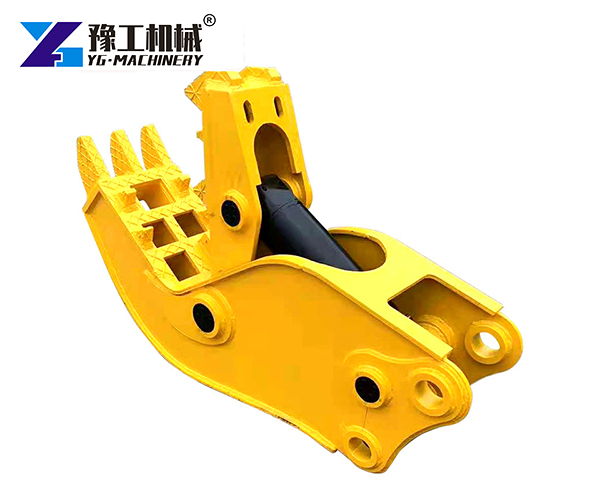
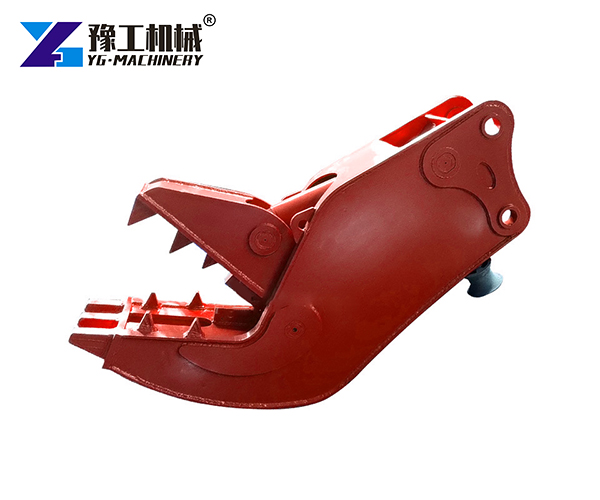
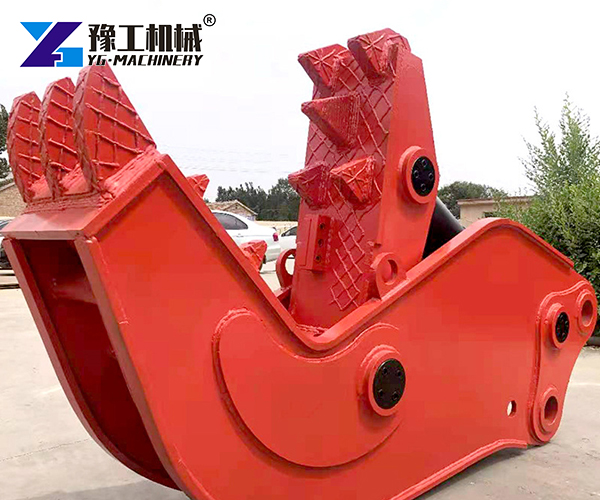
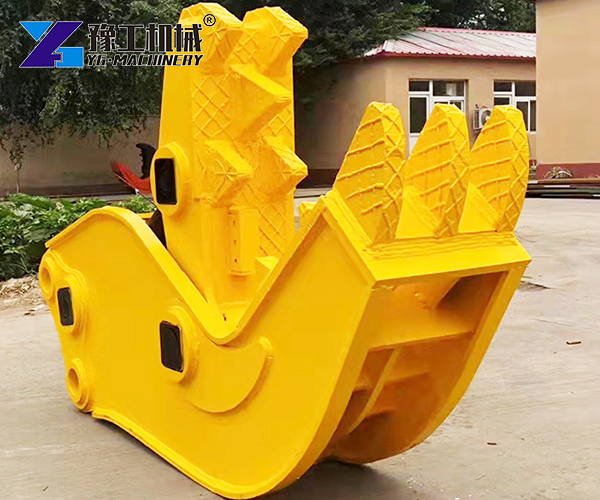
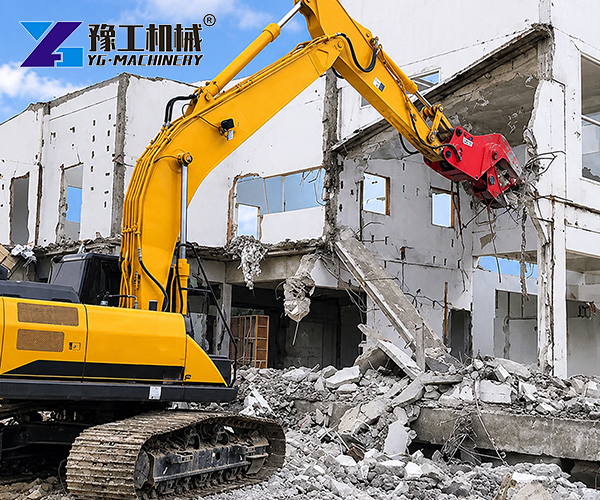
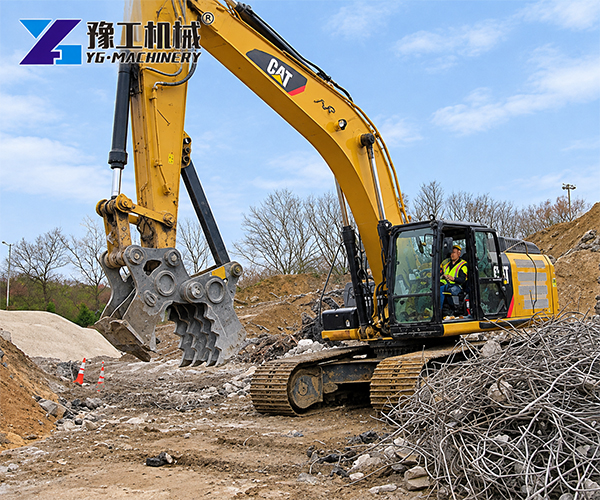
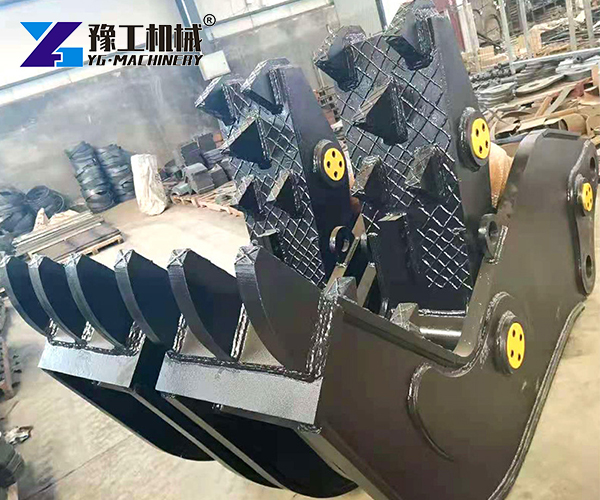
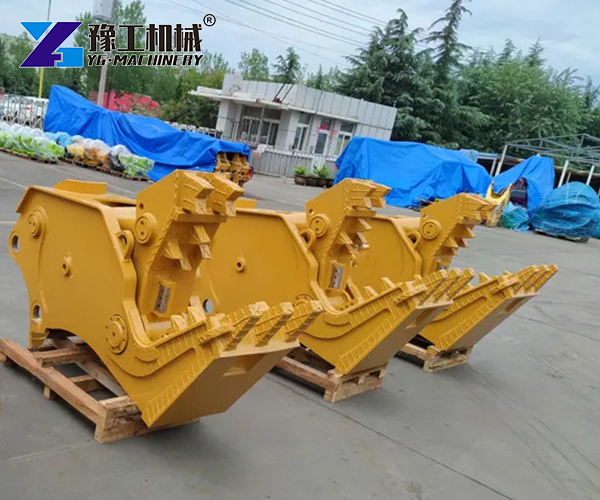
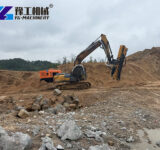
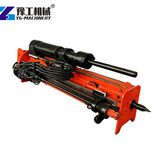
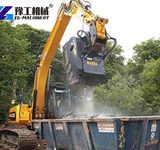
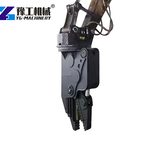
An Excavator Pulverizer is a hydraulic attachment designed to crush concrete structures and process reinforced concrete. It helps break demolished walls, floors, columns, and other concrete sections into smaller pieces. During crushing, the attachment also exposes steel reinforcement, making metal separation easier.
This equipment is widely used in building demolition, road reconstruction, bridge removal, and construction waste recycling. It provides a practical solution for contractors who need to process concrete materials directly at the job site.
Different demolition projects require different equipment sizes and crushing capacities. The following models offer options for various excavator classes.
Item/Model
Unit
YG400
YG600
YG800
YG1000
YG1700
Total Length
mm
1642
1895
2168
2218
3150
Total Width
mm
1006
1275
1376
1598
2100
Blade Length
mm
120
150
180
200
240
Max. Opening Height
mm
587
718
890
1029
1400
Upper Jaw Width
mm
215
280
290
380
400
Lower Jaw Width
mm
458
586
588
720
812
Max. Shear Force
kN
380
650
1650
2250
2503
Working Pressure
Bar
280
320
320
320
320
Weight
kg
670
1350
1750
2750
4709
Suitable Excavator Weight
ton
6-9
10-15
18-26
26-30
50-80
Before purchasing, check the excavator’s lifting capacity, hydraulic pressure, mounting dimensions, and connection requirements. Proper equipment matching helps maintain stable performance and safe operation.
What to Consider When Selecting an Excavator Pulverizer Attachment
Choosing suitable equipment requires more than checking excavator weight. Buyers should also consider the concrete structures, working environment, and expected workload.
Four factors deserve attention:
Excavator Compatibility: Check the machine’s weight, hydraulic system, and mounting connection.
Concrete Thickness: Consider the size and strength of the structures that need processing.
Jaw Design: Review the jaw opening and crushing area to ensure they suit the materials handled at your job site.
Working Conditions: Determine whether the equipment will handle building demolition, road projects, or recycling operations.
For contractors working with large reinforced concrete structures, a suitable hydraulic attachment can improve secondary processing efficiency and reduce unnecessary manual work.
Common Questions About Excavator Pulverizer Equipment
Q1: What materials can a Concrete Pulverizer process?
It mainly handles concrete, reinforced concrete, and demolished building structures. Actual performance depends on material strength and equipment capacity.
Q2: What is the difference between a pulverizer and a hydraulic breaker?
A hydraulic breaker uses repeated impact force to break hard materials. A pulverizer uses pressure from its jaws to crush concrete and expose steel reinforcement.
Q3: Can an Excavator Concrete Pulverizer separate steel bars?
Yes. It crushes the surrounding concrete and exposes embedded reinforcement, making steel collection and separation easier.
Q4: What excavator size is suitable for this attachment?
The suitable excavator depends on the selected model and its technical requirements. Buyers should check machine weight, hydraulic capacity, and mounting compatibility.
Q5: Is an Excavator Demolition Pulverizer suitable for recycling projects?
Yes. It helps reduce concrete waste and separate reinforcement, supporting material sorting and recycling operations.
Planning Your Concrete Processing Project with YG Machinery
Selecting a suitable attachment starts with understanding the actual work. A demolition contractor handling thick reinforced concrete may have different requirements from a recycling company processing smaller concrete sections.
YG Machinery supplies excavator hydraulic pulverizer for international customers. To help identify a suitable model, buyers can prepare the following information:
Excavator details: Brand, operating weight, and hydraulic system information.
Material type: Reinforced concrete, concrete blocks, walls, or other structures.
Working conditions: Building demolition, road reconstruction, or recycling plant operations.
Project requirements: Expected workload and the type of material processing needed.
With these details, the equipment selection process becomes more accurate. YG Machinery can use the project information to help buyers compare suitable models and understand their equipment requirements.For contractors planning a new demolition or recycling project, proper attachment selection is an important step toward building an efficient working system.