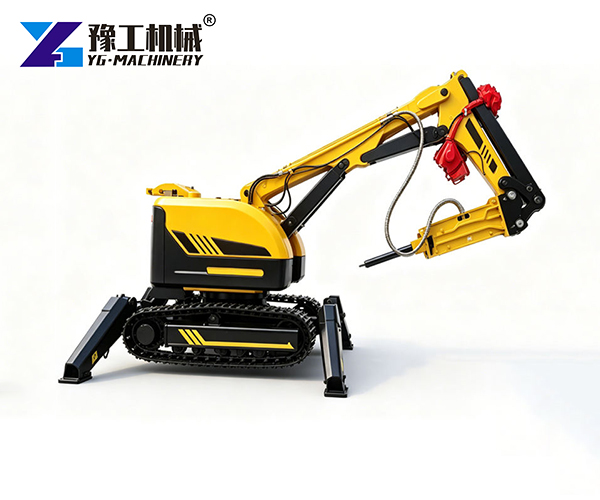
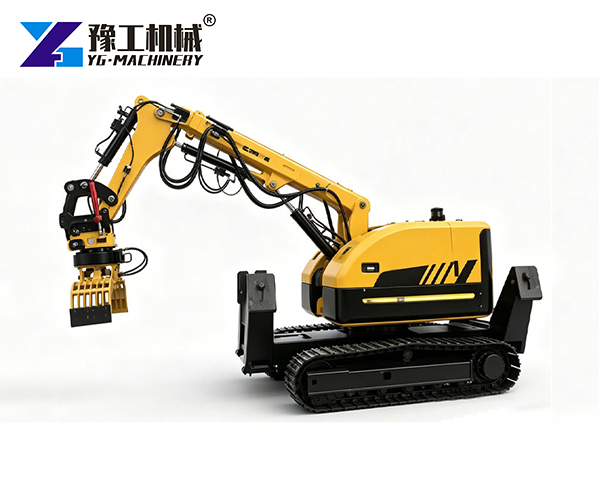
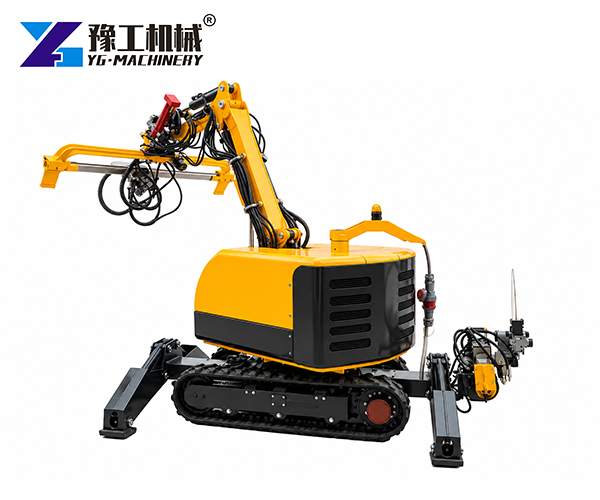
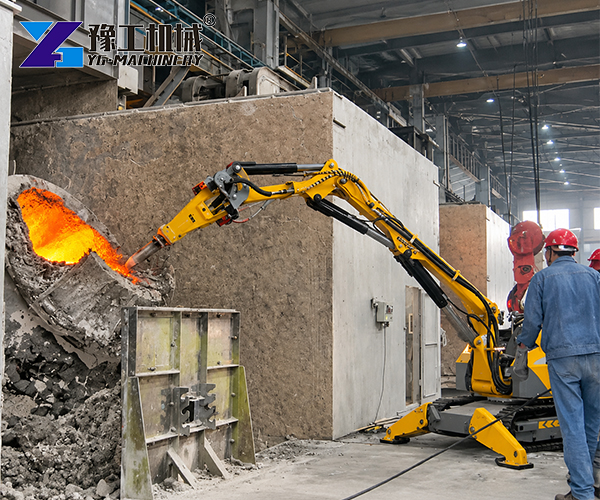
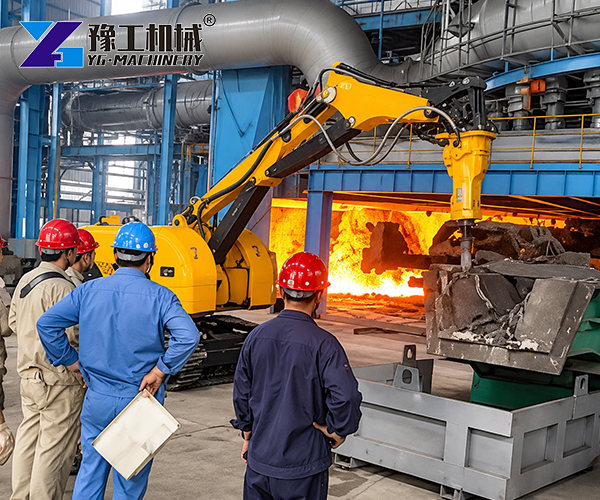
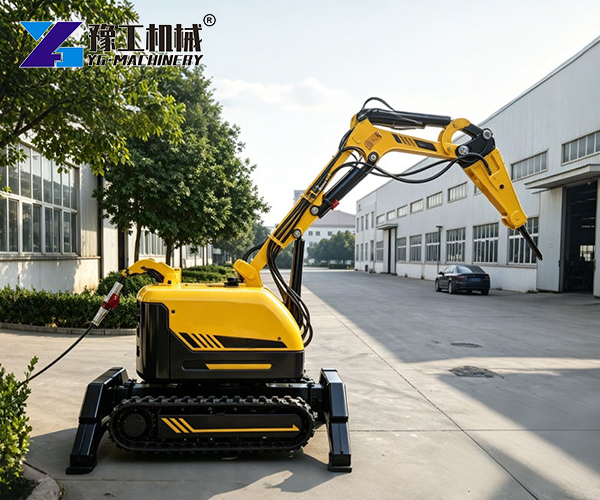
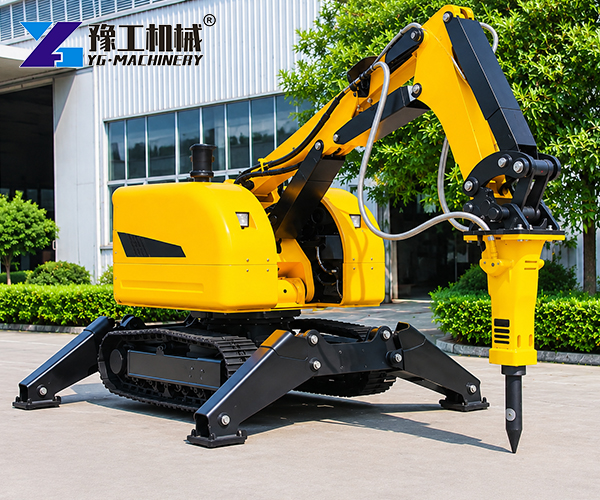
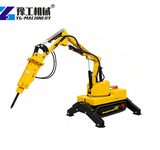
A remote controlled demolition robot is a compact, tracked machine designed for concrete breaking and demolition work in challenging environments. It uses a hydraulic working arm to carry out breaking tasks while the operator controls the machine wirelessly from a safe distance.
Unlike traditional demolition equipment, this machine allows operators to stay away from dust, falling debris, and other potential hazards. Its compact body and flexible arm help it reach confined areas, indoor spaces, tunnels, and other locations where large machines may have difficulty operating.
Available with electric or diesel power, this type of machine can handle different jobsite conditions. With suitable attachments, it supports concrete breaking, structural removal, and other demolition tasks.
Different demolition projects require different machine capacities. Some jobs need compact equipment for restricted spaces, while others require a larger working range and stronger hydraulic performance. Electric and diesel power options also allow buyers to select a suitable configuration for their sites.
The following table shows the main specifications of the available models.
Technical Parameters
YG10D
YG10C
YG15D
YG15C
YG30D
YG50D
YG50C
YG80C
Machine Weight (kg)
1050
1096
1650
1750
3250
6000
6200
8210
Attachment Weight (kg)
120
120
250
250
420
600
600
750
Track Width (mm)
160
180
230
230
300
300
300
400
Travel Speed (km/h)
2.3/4.2
2.3/4.2
2.3/4.2
2.3/4.2
2.7
2.4/4.5
2.4/4.5
2.4/5.0
Rotation Speed (r/min)
10
10
8
8
6
6
6
6
Climbing Angle (°)
30
30
30
30
30
30
30
30
Drive Type (kW)
Electric (11)
Diesel (14.5)
Electric (18.5)
Diesel (18.5)
Electric (22)
Electric (37)
Diesel (74)
Diesel (85)
Hydraulic Flow (L/min)
0–40
0–40
0–70
0–66
0–100
0–130
0–130
0–170
Max. Pressure (MPa)
21
21
25
25
25
25
25
25
Working Pressure (MPa)
16
16
17
17
17
17
18.5
18.5
Wireless Control Range (m)
150
150
150
150
150
150
150
150
Max. Working Height (mm)
4210
4210
4650
4650
6200
6800
6800
7200
Max. Working Length (mm)
3750
3750
4215
4215
5800
6500
6500
8000
Max. Working Depth (mm)
1635
1635
1450
1450
2700
2600
2600
2360
Overall Length (mm)
2225
2225
2820
2820
3805
4660
4660
5160
Overall Width (mm)
730
780
990
990
1210
1640
1640
2255
Overall Height (mm)
1365
1365
1380
1380
1590
1890
1890
2571
D models use electric power, while C models use diesel power. Buyers should confirm the final configuration and compatible attachment before ordering.
Applications of a Remote Controlled Demolition Robot
This equipment supports different demolition tasks across construction and industrial projects.
Building renovation: Remove selected concrete walls, floors, and structural sections during renovation.
Tunnel construction: Carry out concrete breaking in tunnels and underground areas where access for large equipment may be limited.
Industrial maintenance: Remove damaged concrete around factories, equipment foundations, and production facilities.
Mining and quarrying: Assist with suitable material-breaking tasks where the machine can safely reach the work area.
Emergency demolition: Help remove damaged sections after engineers assess the structure and set a safe working plan.
A tracked demolition robot is particularly useful when the working area requires flexible movement and remote operation. Actual suitability depends on site access, ground conditions, and safety requirements.
Robotic Demolition Machine Arm and Attachment Options
The working arm connects the machine body with the tool. Its multi-joint structure allows operators to adjust the tool position and approach the target from different directions.
Attachment selection depends on the material and the required operation:
Project workload: Consider daily operating hours, transport needs, and the expected working range.
The demolition robot price depends on the selected configuration, power type, attachment, and order requirements. Send your project details to YG Machinery to request a suitable quotation.
It is mainly used for breaking concrete and other hard materials in construction, renovation, industrial, and underground projects.
Q2: What is the difference between a demolition robot and an excavator?
A demolition robot is a dedicated machine with remote operation and a working arm. An excavator is a more general machine for digging, lifting, and material handling.
Q3: Can it work indoors?
Yes, if the site provides enough access space, suitable floor capacity, and proper ventilation. Electric models may be suitable for indoor applications when a proper power supply is available.
Q4: How far can the operator control the machine?
The listed wireless control range is 150 m. Actual control performance may depend on site conditions and signal interference.
Q5: How can I get the right model and a quotation?
Share your working environment, material type, preferred power source, and attachment requirements. YG Machinery can help you check the suitable configuration.
Why Choose YG Machinery for a Remote Demolition Robot?
YG Machinery supplies construction and demolition equipment for different project needs. Whether you handle building renovation, concrete removal, or industrial maintenance, choosing equipment that matches the working environment is essential.
With different machine configurations and related equipment options, YG Machinery can help buyers compare suitable solutions for their projects. Contact the team with your working conditions and technical requirements to discuss model selection, attachment compatibility, and a quotation.