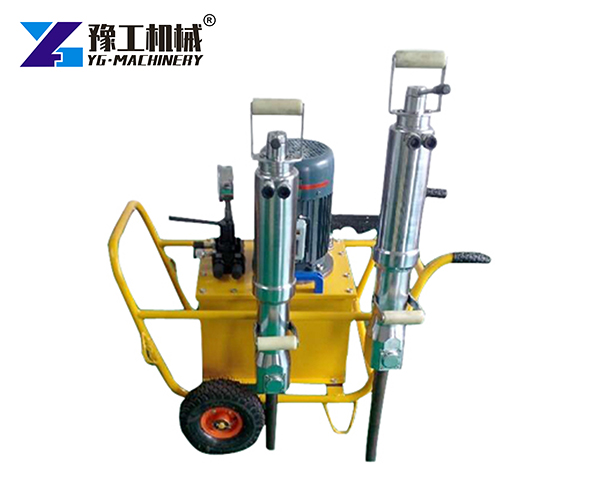
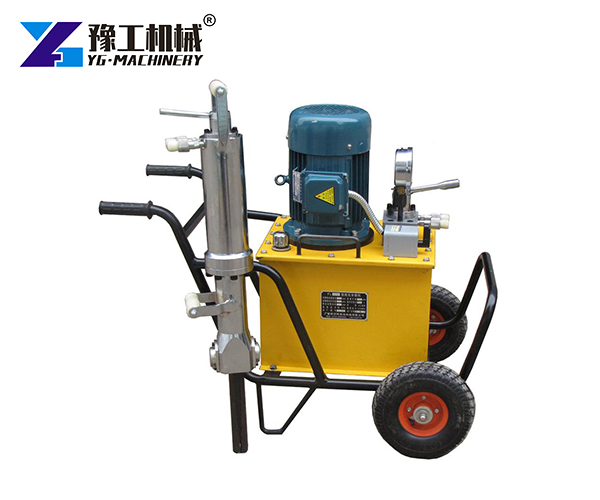
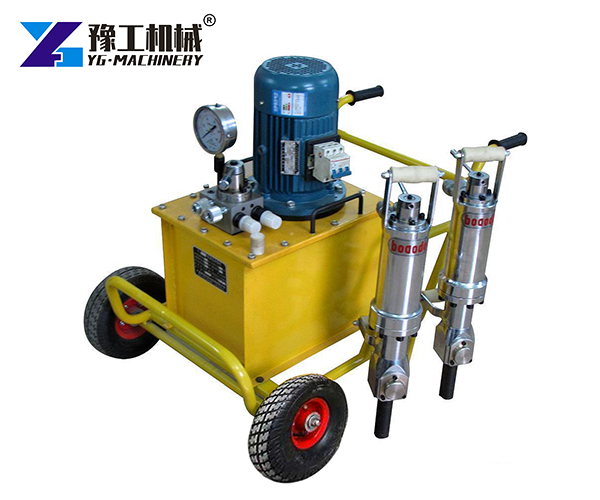
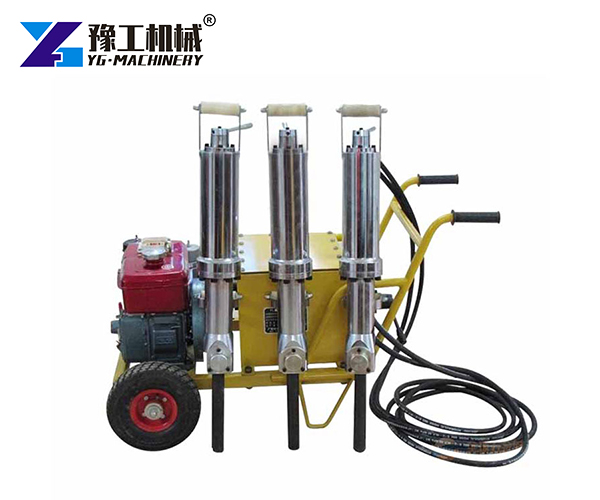
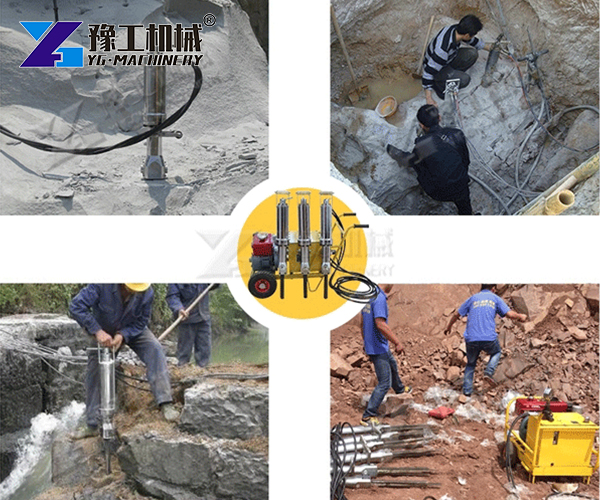
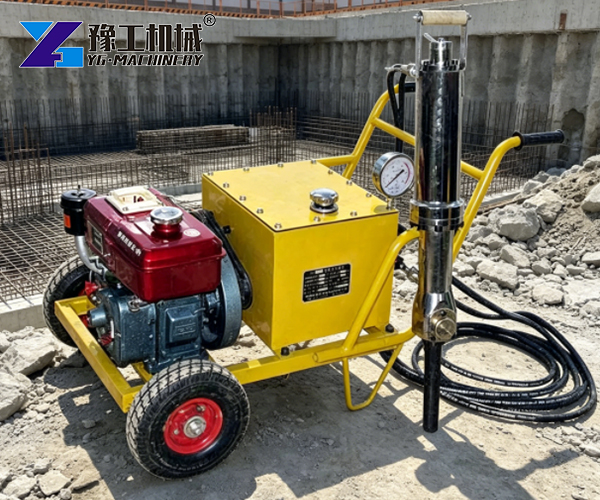
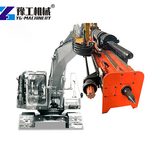
Hard rock removal can become a challenge when construction teams work near buildings, roads, or underground structures. Traditional blasting may not suit these locations because of vibration, noise, and safety restrictions. YG Machinery provides a rock splitter machine that uses hydraulic pressure to separate hard materials through controlled cracking. It offers a practical option for quarrying, mining, foundation excavation, and concrete demolition.
YG Machinery offers three models with different wedge lengths and drilling requirements. The following specifications help buyers compare the equipment before selecting a suitable configuration.
Model
YG-250
YG-350
YG-450
Wedge Length (mm)
250
350
450
Piston Stroke (mm)
90/220
90/220
90/220
Drilling Depth (mm)
>500
>700
>900
Punching Diameter (mm)
42
46
46
Crack Width (mm)
10–20
10–20
10–20
Cleavage Time (s)
10–15
10–15
10–15
Splitting Force (T)
500
800
800
Weight (kg)
240
250
260
The YG-250 is suitable for projects with shorter drilling requirements. The YG-350 and YG-450 provide longer wedge configurations and higher splitting force. Buyers should consider the required hole depth and material conditions when comparing these models.
Hydraulic Rock Splitting Machine: The Wedge Mechanism
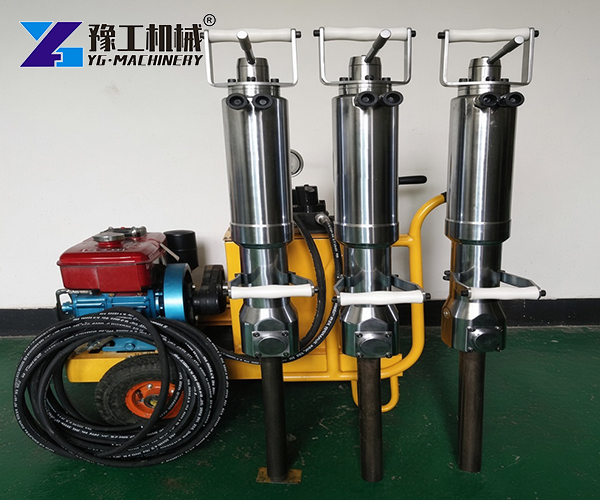
The wedge assembly is the key component that transfers hydraulic power into splitting force. Instead of breaking rock through repeated impacts, it creates pressure inside a drilled hole.
The working process includes three steps:
Drilling: Workers prepare holes at selected positions in the rock.
Insertion: The operator places the splitting cylinder inside the prepared hole.
Expansion: Hydraulic pressure drives the piston and wedge mechanism outward, creating cracks in the material.
Hole spacing and direction affect the splitting result. A suitable drilling pattern helps control how the material separates and makes later removal easier.
Hydraulic Rock Splitter for Sale: Project Applications
This equipment serves projects that require controlled separation instead of conventional blasting.
Mining and Quarrying
Workers can separate large stone sections and remove selected rock formations during extraction operations.
Foundation Excavation
Construction teams can remove underground rock before building foundations, basements, and other structures.
Road and Tunnel Construction
The equipment helps contractors handle hard rock along infrastructure routes where controlled excavation is important.
Concrete Demolition
It can separate suitable concrete foundations and thick concrete sections through pre-drilled holes.
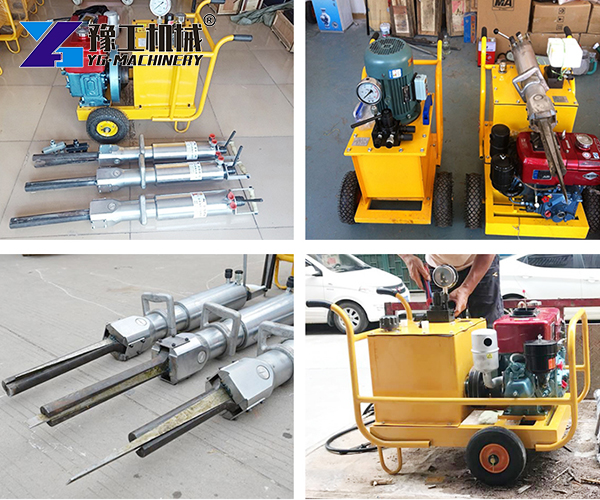
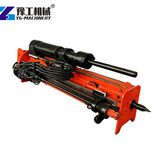
A portable hydraulic rock splitter is particularly useful when workers need to move between different drilling positions. Its separate hydraulic power unit and hoses support flexible positioning around the work area.
Rock Splitter Machine Advantages for Controlled Removal
The main benefit of hydraulic splitting is the way it separates material through internal pressure. This offers several advantages in demanding working environments.
No Explosives: The process does not require explosive charges or blasting operations.
Lower Vibration: Static splitting avoids the repeated impacts associated with conventional breaking methods.
Controlled Separation: Operators can plan hole positions according to the required cracking direction.
Flexible Operation: The hydraulic power unit can stay in a suitable position while workers move the splitting cylinders.
Multiple Material Uses: The equipment can handle suitable natural rock and concrete structures.
For projects that require impact-based breaking, a Hydraulic Breaker Machine offers a different working method. A hydraulic rock splitter is more suitable when internal pressure and controlled separation are the main requirements.
Hydraulic Rock Splitting Machine: Preparing for Site Work
Good preparation helps improve splitting results and reduces unnecessary work. Before starting a project, contractors should check several practical conditions.
Material Type: Identify whether the target material is granite, basalt, limestone, or concrete.
Drilling Pattern: Plan hole positions, spacing, and direction according to the required separation.
Equipment Matching: Make sure the drilling diameter and depth suit the selected splitting unit.
Working Space: Check whether the hydraulic hoses and power unit can reach the required positions safely.
Material Handling: Plan how workers will collect and transport separated rock sections.
A rock splitting machine should match the actual site conditions rather than simply offer the highest rated force.
Yes. It can process hard materials such as granite and basalt. Results depend on rock structure, drilling quality, and operating conditions.
Q2: Does the equipment require pre-drilled holes?
Yes. Workers must prepare suitable holes before inserting the splitting cylinder.
Q3: Can it replace a hydraulic breaker?
Not in every situation. A breaker uses repeated impacts, while a hydraulic rock breaking splitter creates cracks through internal hydraulic pressure. The right choice depends on the material and project requirements.
Q4: Can it split concrete structures?
Yes. It can separate suitable concrete structures through pre-drilled holes. Concrete thickness and reinforcement conditions should be checked before operation.
Q5: How do I choose the correct model?
Compare wedge length, drilling depth, hole diameter, and required splitting force. The rock type and project conditions also affect model selection.
Every rock removal project has its own working conditions. Rock hardness, drilling access, required separation direction, and material size all influence equipment selection.
YG Machinery provides different configurations for contractors who need controlled rock separation in mining, quarrying, and construction. Reviewing the site conditions and drilling requirements first will help determine which configuration is suitable for your next project.