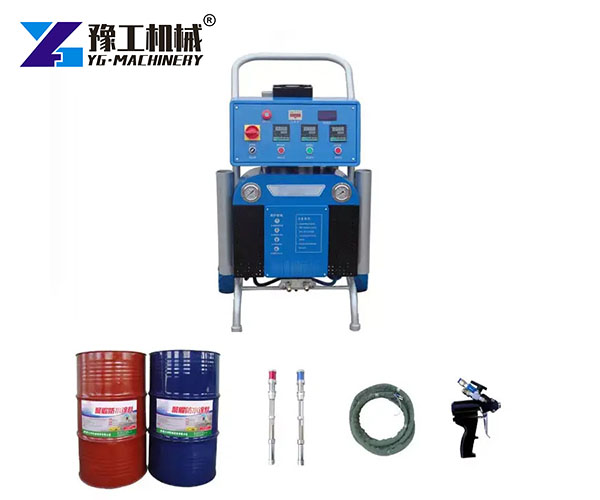
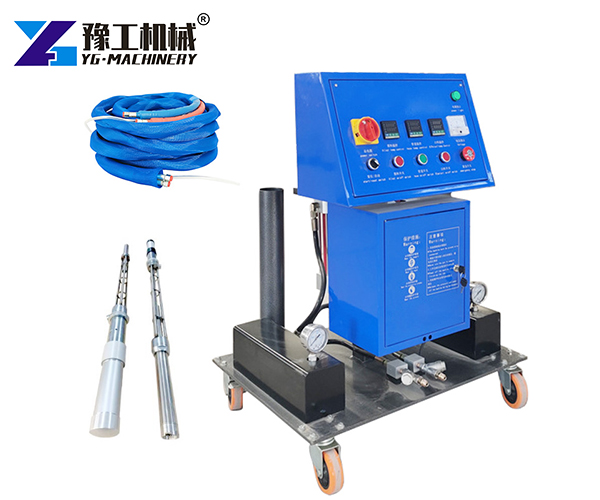
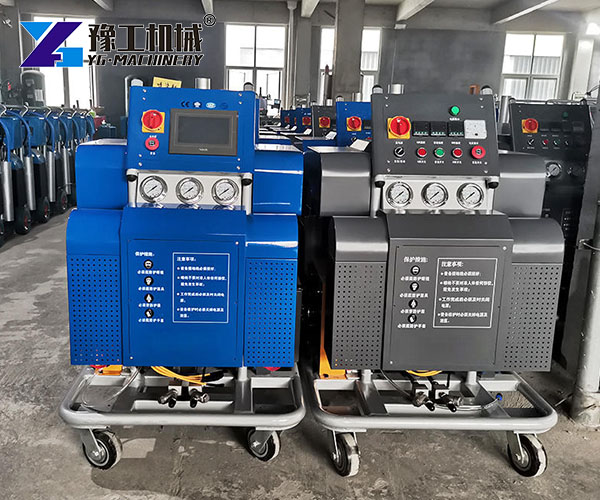
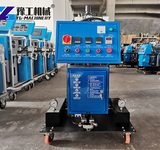
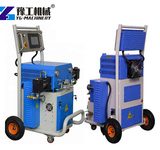
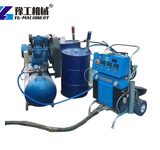
When FrostShield, a Russian industrial equipment maker near Moscow, needed a Polyurethane Spray Foam Machine, the first list did not start with price. Ivan, the owner, listed four needs. The machine had to spray rigid foam on about 5,000 m² of new factory walls and roof. The insulation had to work in winter low-temperature conditions. Part of the workshop floor needed polyurethane elastomer coating for chemical resistance. And the supplier had to provide operator training and ongoing service.
Ivan had asked other suppliers before he contacted YG Machinery. His reason for choosing YG was simple: “YG’s plan was the most targeted, especially considering Russia’s harsh climate.” He did not ask for the lowest price. He asked whether the machine would work in winter and whether someone would help when it stopped. That set the real test for this case.
The Real Test: A Polyurethane Spray Foam Machine for Russian Winter
A machine can look good on a spec sheet and still fail on site. For FrostShield, three gates mattered more than the headline pressure number. Paperwork had to close before shipment. The heating system had to prove itself in winter operation. And the crew had to learn the machine fast enough to keep the project moving.
Gate 1: Paperwork Must Close Before the Machine Ships
Russia requires a mandatory safety review and a technical file package for spray equipment. This is not a step a supplier can finish after the machine arrives. If the factory plans production and shipping first, the unit can get stuck at the border. YG Machinery put this work before shipment.
Ivan asked for internal structure demos and working principle walkthroughs in video calls. As an industrial equipment maker, he could judge whether the supplier was ready for the Russian market. For this Polyurethane Spray Foam Equipment, paperwork was a production scheduling issue, not an after-sales issue. That distinction shaped the whole delivery plan.
Ivan worried about one thing. In winter low temperatures, A and B materials get thicker. If heating only happens at the hose end, the material may leave the working viscosity range before it reaches the gun. YG Machinery recommended the YG-H-T40 with a dual-loop heating system. A and B stay heated through the whole delivery path, not just at the last meter.
For a polyurethane foam spraying machine, winter performance is not a brochure line. It is whether the foam works after spraying. The YG-H-T40 uses 22 kW heating power, 26 kW total power, and a 0–85°C temperature range. According to YG Machinery’s case record, the customer later reported stable operation in winter low-temperature conditions and insulation performance as expected. That matters. If heating fails, foam density and closed-cell rate drop. The wall may look fine, but it will not hold heat.
Gate 3: Training That Made the Crew Productive Fast
YG Machinery promised 3 days of free online video training after delivery. According to the case record, the customer said: “Our workers quickly mastered the machine. Your online training was excellent and helped us solve early problems.”
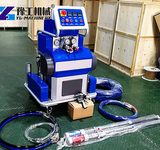
This is not high-tech. But it decides the gap between arrival and production. YG also shipped different gun types, spare heated hoses, and seals. Packaging was reinforced for long-distance transport. These details keep the pu foam spray machine from waiting for parts. For a first unit in Russia, that matters as much as pressure output.
Key Specs of the Recommended Polyurethane Spray Foam Machine
The recommended model for this case was the YG-H-T40. Here are the key parameters:
Parameter
YG-H-T40
Power Supply
380V/50Hz
Heating Power
22 kW
Total Power
26 kW
Drive Type
Hydraulic
Material Output
2–12 kg/min
Air Supply
≥0.6 m³/min
Max Output Pressure
36 MPa
A/B Ratio
1:1
Temp Range
0–85°C
Packaging Size
1250×1050×1500 mm
Gross Weight
350 kg
Air Compressor
4 kW, 0.5 m³/min
This polyurethane spraying equipment was chosen for stable pressure and ratio control under load. FrostShield needed to switch between rigid foam for walls and elastomer for floors. A fixed 1:1 ratio only helps if it stays fixed during long runs. The YG-H-T40’s hydraulic drive and 36 MPa max output pressure gave the crew room to work in both applications. For a Polyurethane Insulation Spray Machine, that flexibility matters more than a single peak number.
YG Machinery builds and supplies polyurethane spray foam machines for cold-climate projects. The team supports model selection, export paperwork, heating setup, and operator training. Units are shipped with spare guns, heated hoses, and seals to reduce downtime in the first production window.
If you need a machine for insulation or coating work in Russia or a similar market, send your project details. YG Machinery will reply with a recommended model and a delivery plan.
Contact YG Machinery today for a tailored proposal.【WhatsApp/WeChat/Phone/Skype】+86 13937183602