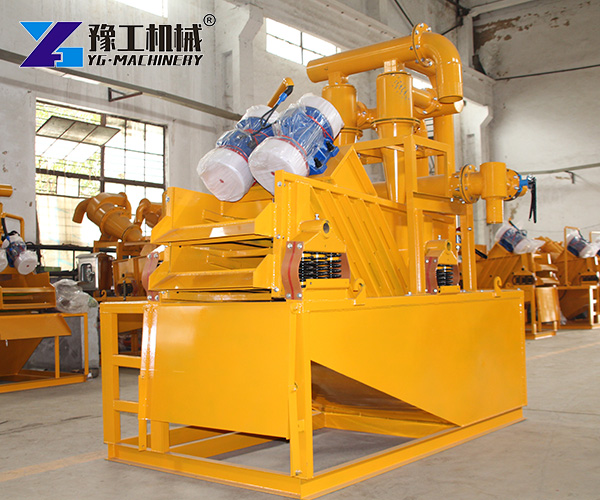
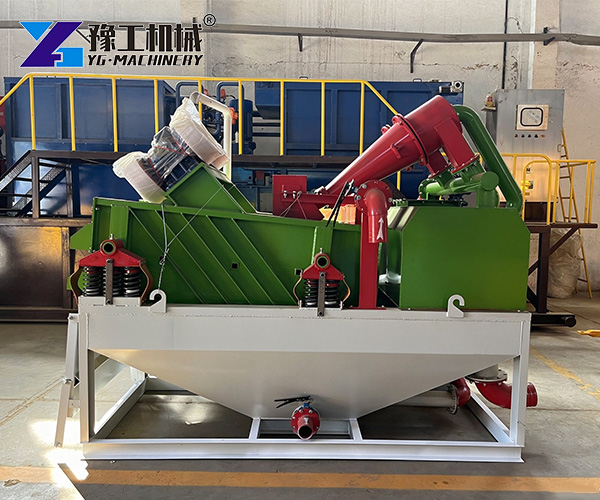
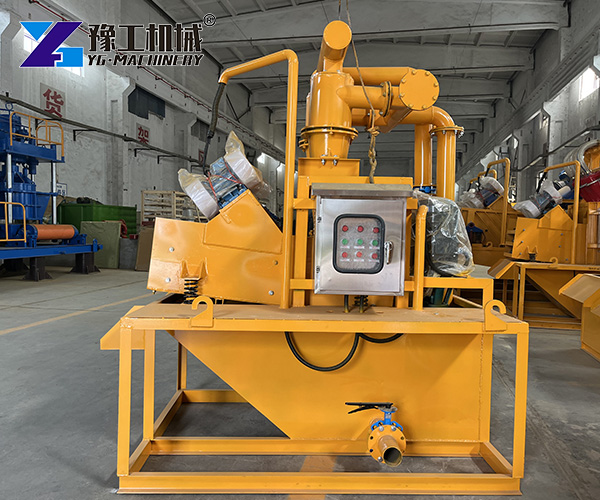
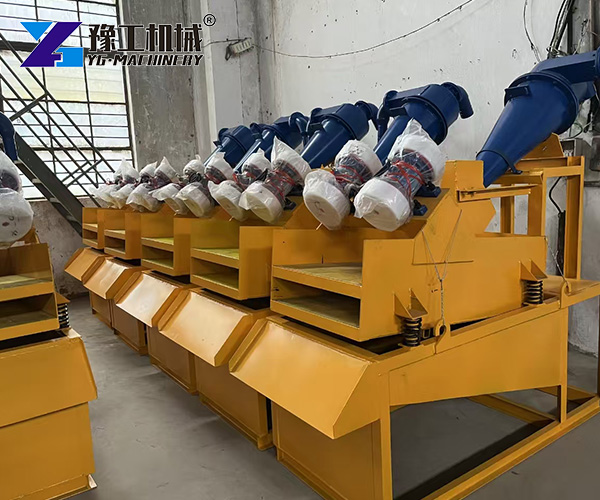
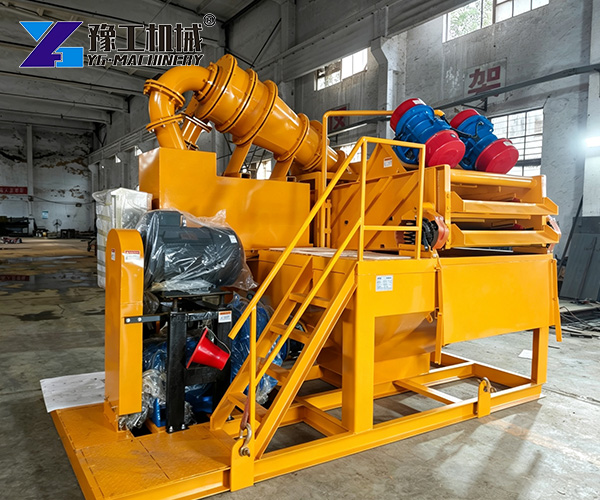
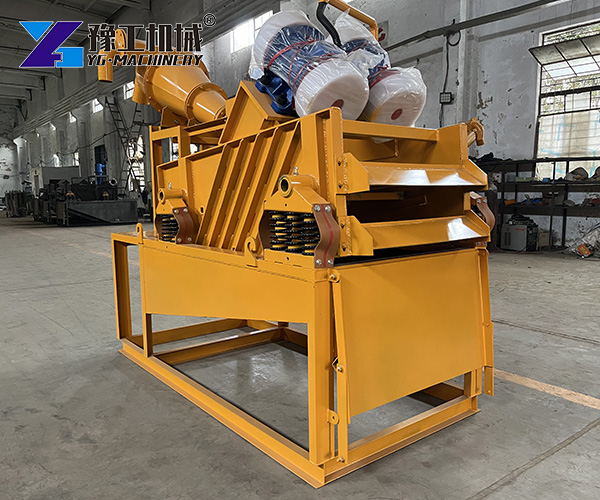
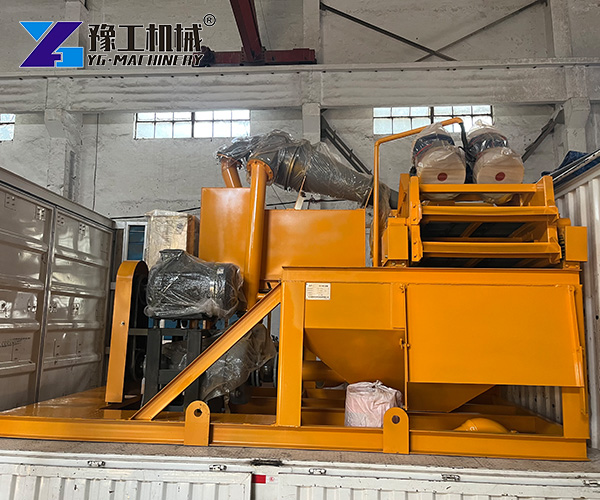
A Mud Sand Separator removes sand, stones, and other solid particles from slurry during construction and industrial operations. It helps reduce the sand content in discharged mud and allows contractors to reuse the treated slurry in suitable working processes. This can reduce material waste and improve job site management.
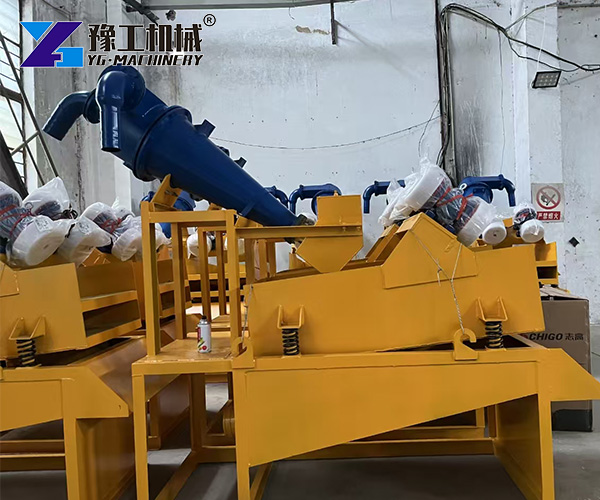
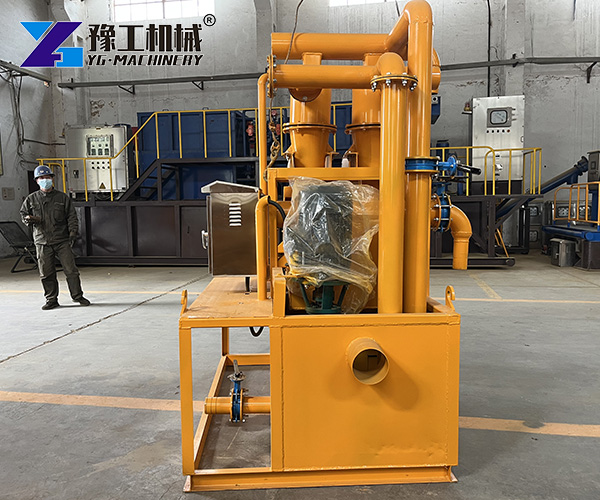
YG Machinery designs this mud sand separation system for projects that need reliable solid-liquid separation. The machine combines a hydrocyclone, vibrating screen, and slurry collection tank to handle different particle sizes.
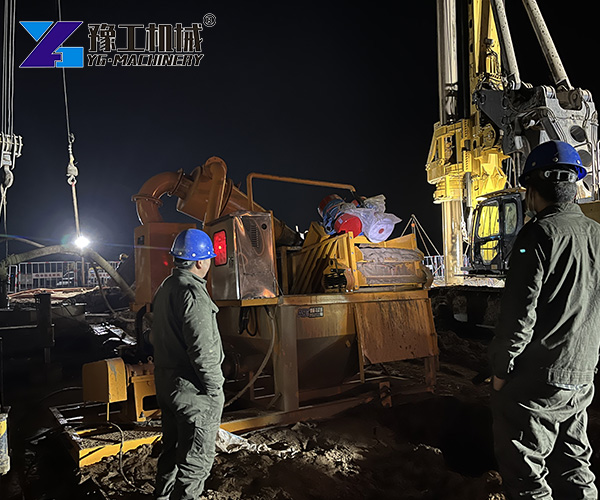
It is useful for piling, trenchless drilling, shield tunneling, bridge construction, and other projects where drilling or excavation produces sand-bearing slurry.
YG Machinery offers several models with different processing capacities and equipment configurations. Buyers can compare the following specifications before selecting a suitable machine.
Technical Parameters
YG-100A
YG-250A
YG-160B
YG-200B
YG-250B
YG-250C
YG-300C
Max. Processing Capacity (m³/h)
100
250
160
200
250
250
300
Total Power (kW)
0.5
3
17.2
24.2
25
48
59.4
Vibration Motor Power (kW)
0.25×2
1.5×2
1.1×2
1.1×2
1.5×2
1.5×2
2.2×2
Machine Weight (kg)
550
1,350
1,950
2,050
2,300
4,000
5,500
Screening Capacity (t/h)
10–25
25–62.5
16–40
20–50
25–62.5
25–62.5
30–75
Dimensions (m)
2.5×0.83×2.1
3.7×1.2×2.4
2.7×1.9×2.6
2.7×1.9×2.6
3.3×2.0×2.3
4.0×2.3×2.7
4.3×3×3.1
The actual processing results depend on slurry composition, particle size, and site conditions. Contact YG Machinery to confirm the suitable configuration for your project.
The equipment uses centrifugal separation and vibrating screening to remove solid particles from slurry. Each stage handles a different part of the process.
1. Slurry Feeding
A suitable pump transfers the sand-bearing slurry into the hydrocyclone. The feed must remain fluid enough for stable pumping.
2. Centrifugal Separation
The hydrocyclone creates a rotating flow. Heavier sand and stone particles move toward the lower discharge outlet, while lighter mud and water leave through the upper overflow outlet.
3. Vibrating Screening
The discharged material reaches the screen. The screen separates larger particles from the remaining slurry through vibration. Different screen openings help match the separation process to the material.
4. Slurry Collection and Recycling
The collection tank receives the filtered slurry. On B and C models, an internal pump sends the slurry back to the hydrocyclone for further treatment. This repeated process helps remove more fine sand.
Mud and Sand Separator: A, B and C Model Differences
The main difference between these models is their slurry circulation design. Understanding this difference helps buyers choose equipment based on material conditions.
A Series – Single-Cycle Design
A models process slurry once through the separation system. They work well with medium and coarse sand when the feed does not contain large stones. This design offers a simpler arrangement for less demanding separation tasks.
B Series – Internal Circulation with a Vertical Pump
B models return collected slurry to the hydrocyclone for repeated separation. They are especially useful when the material contains large stones and fine sand. The vertical pump offers a lower-cost configuration while maintaining the intended circulation function.
C Series – Internal Circulation with a Horizontal Pump
C models also use repeated slurry treatment. Their horizontal pumps are common in larger equipment configurations. The layout allows easier maintenance access and supports stable operation. However, this configuration generally has a higher equipment cost.
For projects that require finer sand removal, B and C models are generally more suitable than A models.
A Mud Sand Separation Machine can serve various projects where slurry contains unwanted solid particles.
Piling Construction: Drilling and piling work produces slurry mixed with sand and stones. Removing these particles helps maintain suitable slurry conditions for foundation operations.
Horizontal Directional Drilling: Trenchless drilling creates drilling fluid mixed with soil and rock particles. Separation equipment helps recover usable slurry during drilling. Explore our Horizontal Directional Drilling Machine for related underground construction work.
Shield Tunneling and Underground Construction: These projects produce large amounts of soil-bearing slurry. Sand removal helps manage the returned material and supports slurry recycling.
Bridge and Foundation Projects: Drilling operations for bridge foundations often produce sand-bearing mud. A suitable separation system helps process this material before reuse or discharge.
Mud Sand Separation Equipment: Operating Conditions and Screen Selection
Before purchasing a Slurry Sand Separator, buyers should check whether the incoming material meets the equipment’s working requirements.
Slurry Fluidity: The feed must be pumpable. Thick, dry, or hardened material cannot enter the system properly.
Particle Size: The equipment can handle coarse particles and large stones, but extremely fine sand, such as particles around 100 mesh or finer, can be difficult to separate effectively.
Water Content: This equipment is designed for slurry separation, not for dewatering dry or nearly dry material. A suitable amount of water must be present in the feed.
Screen material also affects separation performance:
Screen Type
Main Characteristics
Polyurethane Screen
Good wear and corrosion resistance, but relatively low water permeability
Oilfield Stainless Steel Screen
High water permeability and small slot openings, but shorter service life
Slotted Stainless Steel Screen
High open area, good water flow, and better durability, but higher cost
The best choice depends on the particle size, required separation result, slurry properties, and expected service conditions.
Q1: What is the difference between A, B, and C models?
A models use single-cycle separation. B and C models use internal circulation to process slurry repeatedly. B models have vertical pumps, while C models use horizontal pumps.
Q2: Can the machine separate very fine sand?
It can remove many sand particles, but extremely fine particles, such as around 100 mesh or finer, are difficult to separate effectively. Actual results depend on the slurry and screen configuration.
Q3: Can it process slurry containing large stones?
Yes, but the model selection matters. B and C models are generally more suitable for projects with large stones and fine sand.
Q4: Can the filtered slurry be reused?
Yes. The internal circulation system on B and C models allows slurry to pass through the separation process again. Its suitability for reuse depends on the required slurry properties.
Q5: How do I choose the rightmud sand separation equipment?
Consider the slurry flow rate, sand particle size, stone content, required separation result, and site conditions. Share these details with YG Machinery to receive a suitable recommendation.
YG Machinery provides different separation configurations for construction, drilling, and industrial projects. Whether you need a single-cycle machine or an internal circulation system, our team can help you compare the available options.
Contact YG Machinery with your slurry conditions, expected processing capacity, and project requirements. We will help you select a suitable model and provide detailed specifications and a competitive quotation.